Friday, 31 March 2017

Crude settles above $50 amid optimism for OPEC deal extension - Sean Seshadri

Crude futures settled higher on Thursday, amid optimism that an OPEC led production cut deal would be extended beyond June, following bullish comments from Kuwait oil chief Essam al-Marzouq.
On the New York Mercantile Exchange crude futures for May delivery gained 84 cents to settle at $50.35 a barrel, while on London's Intercontinental Exchange, Brent gained 61 cents to trade at $53.15 a barrel.
© Reuters.  Crude prices settled above a key price level on Thursday
Crude futures settled above the key $50-level, as crude prices hit a three-week high of $50.45, after Kuwait oil minister Essam al-Morzouq said his country was among several nations that supported the idea of extending the current deal between OPEC and non-OPEC members beyond June.
In November last year, OPEC and other producers, including Russia agreed to cut output by about 1.8 million barrels per day (bpd) in an effort to combat the oversupply issue that has pressured prices over the last two years.
OPEC members have been high compliance with the deal to cut supply, which came into effect in January this year, while a ramp up in U.S. production of shale and crude has weighed on oil prices.
Despite, a dip in crude inventories on Wednesday, crude stockpiles remain at record highs – at over 520 million barrels, current crude supplies are up 6% over the past year. Rising U.S. crude stockpiles sparked concerns that OPEC may struggle to drain the glut in supply.
Meanwhile, market participants turn attention to Baker Hughes rig count, due to be released on Friday at 14:00 EDT.

Thursday, 30 March 2017

Gold lower in Asia but support from India, China eyed - Sean Seshadri

Gold prices edged lower in Asia on Thursday with demand prospects in the world's top two importers, China and India, in focus with physical and exchange traded fund demand on hopes tax reform by New Delhi could cut the cost of bullion imports and as Chinese buyers seek a hedge for a weaker currency.
Gold for April delivery on the Comex division of the New York Mercantile Exchange eased 0.14% to $1,251.90 a troy ounce. Copper futures on the Comex were last quoted at $2.676 a pound.
Overnight, gold prices traded modestly lower on Wednesday, weighed by a rise in the dollar, which continued to recover from multi-month lows, after the release of upbeat economic data.
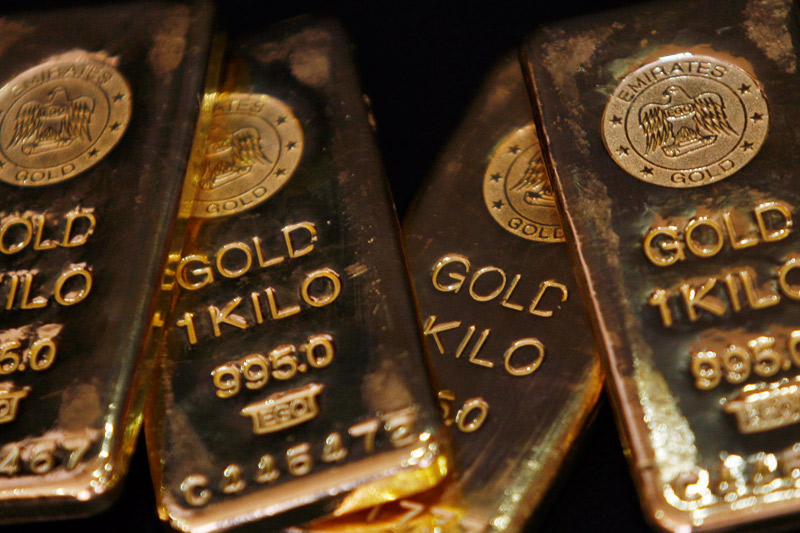
© Reuters.  Gold down in Asia
Gold prices dipped to a session low of $1,246.50, as stronger than expected U.S. home sales data supported the narrative of a stronger U.S. economy, which pushed the dollar to session highs. The U.S. National Association of Realtors said its pending home sales increased by 5.5% last month, which was far above economists’ forecast of a 2.4% increase.
Meanwhile, British Prime Minister Theresa May triggered Article 50 on Wednesday, the legal process by which Britain will leave the EU. Article 50 gives the leaving country two years to negotiate an exit deal and once it's triggered, it can't be stopped except by unanimous consent of all member states.
Elsewhere, investors mulled over comments from Federal Reserve officials, as Fed member Charles Evans said Wednesday, he has confidence that two total rate increases in 2017 seems “very safe”.
Federal Reserve Bank of Boston President Eric Rosengren took a somewhat bullish outlook on possible rate hikes, after he said the U.S. central bank should be prepared to raise interest rates a total of four times in 2017 to prevent the U.S. economy from overheating.
Gold is sensitive to moves in U.S. interest rates, which lift the opportunity cost of holding non-yielding assets such as gold, while boosting the dollar in which it is priced.

North Dakota oil output set to rise as controversial pipeline opens - Sean Seshadri

North Dakota oil production will get a shot in the arm next month as a pipeline comes online despite opposition by environmental groups and Native Americans, allowing the energy industry to save at least $540 million in annual shipping costs.
The Dakota Access Pipeline gives the state's producers cheaper access to refineries and other customers on the U.S. Gulf Coast.
Market players said they expect this will hasten a revival of output from the Bakken region which fell sharply along with global oil prices during the past two years.
"We're back to growth in the Bakken," Hess Corp (N:HES) Chief Executive Officer John Hess said in a recent interview. The New York-based company has contracts to send roughly half its daily North Dakota output through DAPL. For 2017, Hess has said its Bakken production could grow more than 10 percent.
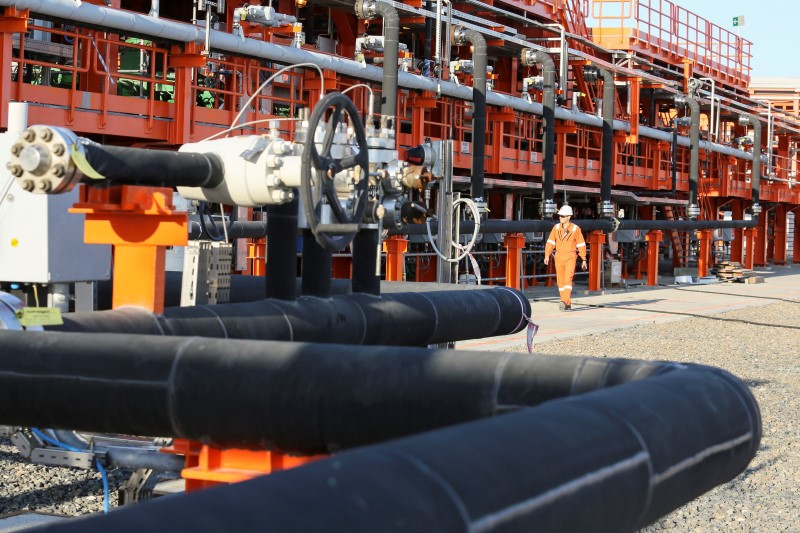
© Reuters.  North Dakota oil output set to rise as controversial pipeline opens
President Donald Trump approved the $3.7 billion pipeline in February, reversing the prior administration which had blocked it last December with a decision by the U.S. Army Corps of Engineers.
Energy Transfer Partners LP (N:ETP), which operates the 1,100 mile (1,770 km) long DAPL, has begun filling the line with crude and could reach full operating capacity by late April, based on industry estimates.
DAPL "will provide a safer, more environmentally responsible and more cost-effective transportation system to move crude across this country as opposed to truck or rail," said ETP spokeswoman Vicki Granado.
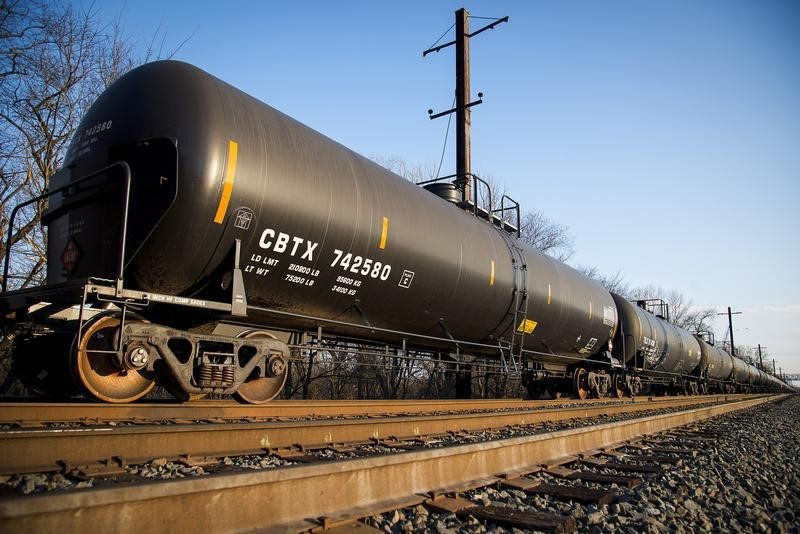
The pipeline will carry about 500,000 barrels of oil per day, more than half of North Dakota's daily output, cutting reliance on riskier rail-cars and reducing transport cost by roughly $3 to $5 per barrel, analysts estimate.
That should help level the playing field between Bakken producers and rivals in other U.S. shale plays, many of which are closer to refineries and other customers.
"Economics for drilling in the Bakken will look better because of DAPL," Rusty Braziel of RBN Energy consultants in Houston, said in an interview.
The state's drilling rig count has jumped 40 percent since early February, when Trump gave final approval to the pipeline. By the end of the year, analysts expect the rig count to rise another 10 percent or more.
DAPL's opponents say they will continue to oppose the line and oil production across North Dakota, which pumps more crude each day than any state but Texas.
"Just because oil flow is pending does not mean that it cannot be stopped by court order, and we have a strong, ongoing case in front of the courts," said David Archambault II, chairman of North Dakota's Standing Rock Sioux tribe, which lives adjacent to the line.
OUTLOOK
Transportation savings from DAPL are a key factor oil companies are considering when deciding whether to boost production, executives, analysts and investors said.
Hess plans to triple the number of drilling rigs it operates in North Dakota this year. The company will move the 30 percent of its existing Bakken production from rail to pipeline once DAPL opens.
Oasis Petroleum Inc (N:OAS), another large Bakken producer, said its 2017 output could rise more than 30 percent. DAPL "is definitely going to give us more options to get our product to market," Oasis Chief Executive Officer Tommy Nusz said in an interview.
Whiting Petroleum Corp (N:WLL), the state's largest oil producer, does not contract for space on DAPL, nor does Continental Resources Inc (N:CLR), the second-largest.
But Continental expects DAPL to ease a transport bottleneck out of the state and open room on other pipelines, allowing it to stop using rail.
Both Whiting and Continental have projected production to rise more than 20 percent this year. The companies did not respond to requests for comment.
North Dakota's oil production fell 13 percent in the last 12 months for which data are available to about 980,000 barrels per day (bpd) due to low prices. While the expected jump in 2017 output likely won't return output to its 2015 peak, it could help statewide production again rise above 1 million barrels per day.
Another reason for rising production is that higher prices have prompted many companies to hedge, or sell forward, some of their output, which bolsters confidence. Whiting and Oasis, for example, have hedged more than half of 2017 production.
But the state's producers say that DAPL's opening, after months of uncertainty, gives them confidence they can ship their product to market.
"We have to have a more pragmatic approach to infrastructure development in this country," said Hess.
Monday, 27 March 2017

Crude prices gain in Asia after hints on output cut extension - Sean Seshadri

Crude prices gained in Asia on Monday after a weekend meeting that saw some promise for the extension of a coordinated output cut by OPEC and non-OPEC key producers.
At the weekend, a joint committee of ministers from OPEC and non-OPEC oil producers has agreed to review whether a global pact to limit supplies should be extended by six months. Oil sector analysts said the lack of an immediate extension could drag on crude prices.
U.S. West Texas Intermediate crude for May on the New York Mercantile Exchange rose 0.44% to $48.18 in early Asia. Elsewhere, on the ICE Futures Exchange in London, Brent oil for May delivery was last quoted up 0.41% to $51.01 a barrel.
In the week ahead, market participants will eye fresh weekly information on U.S. stockpiles of crude and refined products on Tuesday and Wednesday to gauge the strength of demand in the world’s largest oil consumer.
© Reuters.  Crude up in Asia
Last weeek, oil futures settled higher on Friday, but posted a weekly loss of around 2% as the market weighed rising shale production and record-high stockpiles in the U.S. against efforts by major producers to cut output to reduce a global glut.
Data from oilfield services provider Baker Hughes on Friday revealed that the number of active U.S. rigs drilling for oil rose by 21 last week, the tenth weekly increase in a row. That brought the total count to 652, the most since September 2015.
Meanwhile, the U.S. Energy Information Administration said on Wednesday that crude oil inventories rose by 5.0 million barrels last week to an all-time high of 533.1 million, feeding concerns about a global glut.
Oil has fallen sharply this month amid concern that the ongoing rebound in U.S. shale production could derail efforts by other major producers to rebalance global oil supply and demand.
OPEC agreed in November last year to curb its output by about 1.2 million barrels per day between January and June. Russia and 10 other non-OPEC producers have agreed to jointly cut by an additional 600,000 barrels per day.
In total, they agreed to reduce output by 1.8 million barrels per day to 32.5 million for the first six months of the year, but so far the move has had little impact on inventory levels.
OPEC's latest monthly report showed global oil stocks in January rose to 278 million barrels above the five-year average.

Friday, 24 March 2017

Oil edges up as Saudis cut supplies to U.S., but global glut remains - Sean Seshadri

Oil prices edged up on Friday, supported by a fall in Saudi exports to the United States, but overall markets remained under pressure on the back of a world market awash with fuel.
Benchmark Brent crude futures (LCOc1) were at $50.69 per barrel at 0756 GMT, up 13 cents or 0.3 percent, from their last close.
U.S. West Texas Intermediate (WTI) crude futures (CLc1) were up 18 cents, or 0.4 percent, at $47.88 a barrel. Brent was heading for a weekly fall of about 2.1 percent, while WTI was off about 1.9 percent.
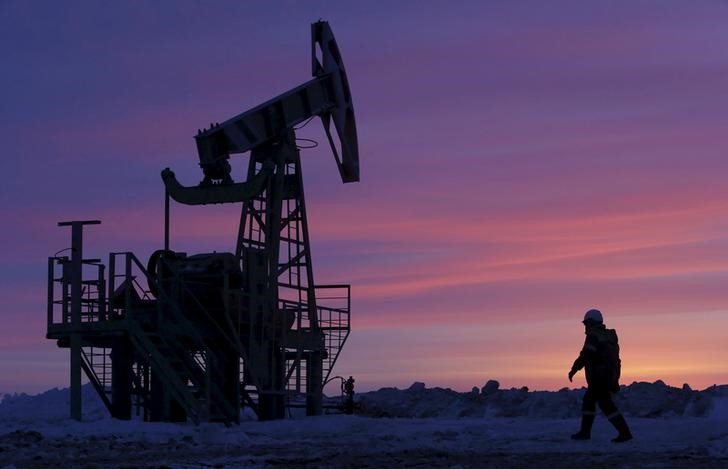
© Reuters. File photo of a worker walking past a pump jack on an oil field owned by Bashneft, Bashkortostan
Traders said the increase came as Saudi Arabia said its crude exports to the United States would fall by around 300,000 barrels per day (bpd) between February and March.
In the United States, overseas oil suppliers like Saudi Arabia have to compete against rising shale drilling, which has pushed up U.S. oil production by more than 8 percent since mid-2016 to just above 9.1 million bpd.
To other major consumer regions, however, Saudi exports remain high despite an effort led by the Organization of the Petroleum Exporting Countries (OPEC), and supported by other producers including Russia, to cut output by 1.8 million bpd during the first half of the year.
Data in Thomson Reuters Eikon shows that OPEC shipments to Asia, the world's biggest and fastest growing oil consuming region, were at 17.6 million bpd in March, up more than 5 percent since January, when the cuts officially started, in a sign that OPEC is shielding its main customers from the supply reductions.
Unless OPEC extends the curbs beyond June or makes bigger cuts, traders say oil prices are at risk of falling further.
"OPEC's goal of drawing down inventories to normal levels is not going to be reached before their agreement expires on June 30," said U.S. investment bank Jefferies in a note to clients.
Dennis Gartman, founder and editor of the Gartman Letter said the longer term outlook was for ongoing low oil prices.
"This slump is very real ... Fracking has only just begun here in the U.S. and it will be transferred swiftly to other countries abroad, so the supply of crude oil is going to increase rather dramatically in the years to come," he told the Reuters Global Markets Forum on Friday.
Despite the OPEC-led cuts that began in January, Brent has fallen by over 13 percent from its 2017 highs in early January as other producers have stepped up and filled the gap.

Thursday, 23 March 2017

Crude rebounds in Asia as market looks ahead to U.S. rig count - Sean Seshadri

Crude prices rebounded in Asia on Thursday as markets shrugged off downbeat supply data so far this week from the U.S. and looked ahead to more word on the supply response.
On the New York Mercantile Exchange crude futures for April delivery rose 0.73% to $48.39 a barrel, while on London's Intercontinental Exchange, Brent was last quoted at $50.98.
Overnight, crude futures settled lower on Wednesday, after the latest Energy Information Administration (EIA) report showed a faster rise than expected in U.S. crude inventories.
© Reuters. Crude rebounds in Asia
For the week ended March 15, The EIA said that crude oil inventories rose by 5 million barrels to a record 533.1 million barrels compared to estimates of an increase of only 2.8 million barrels.
Gasoline inventories dipped by 2.811 million against expectations for a draw of 2.008 million barrels while distillate stockpiles fell by 1.910 million barrels, compared to expectations of a 1.386 million decline.
Crude futures have turned bearish this week as fears that a ramp up in U.S. crude and shale oil production may dampened OPEC’s efforts to rebalance supply and demand in the industry.
In November last year, OPEC and other producers, including Russia agreed to cut output by about 1.8 million barrels per day (bpd) in an effort to combat the oversupply issue that has pressured prices over the last two years.
Meanwhile, market participants turn attention to Baker Hughes rig count, due to be released on Friday at 13:00 EDT.

Wednesday, 22 March 2017

Crude weaker in Asia after API figures, NKorea missile test - Sean Seshadri

Crude prices held weaker in Asia on Wednesday after industry estimates showed a sharp gain in U.S. inventories and investors showed caution after an apparent missile test by North Korea.
On the New York Mercantile Exchange crude futures for May delivery fell 0.19% to $48.15 a barrel, while on London's Intercontinental Exchange, Brent eased 0.20% to $50.86 a barrel.
Crude stocks rose by 4.53 million barrels at the end of last week, the American Petroleum Institute (API) reported on Tuesday, a larger than expected build, while gasoline inventories dropped by a more than expected 4.93 million barrels and distillates fell by 880,000 barrels.
Supplies at the oil hub of Cushing, Oklahoma, rose by 1.97 million barrels.
© Reuters.  Crude down in Asia
The figures were expected to show a crude stock build of 2.8 million barrels at the end of last week. Gasoline supplies are seen down 2.008 million barrels, while distillates likely declined by 1.386 million barrels. The API figures are followed on Wednesday by official data from the U.S. Energy Information Administration.
Crude after an apparent North Korea missile test that reports said failed.
Reuters, citing Yonhap news agency, reported the isolated nation in the Korean peninsula may have conducted a missile launch with a U.S. military spokesman adding that "a missile appears to have exploded within seconds of launch."
Overnight, crude settled lower on Tuesday, ahead of the API report and inventories from the Energy Information Administration (EIA) due to be released on Wednesday.
Meanwhile a slump in the dollar to six-week lows failed to lift dollar denominated crude – the US Dollar Index dipped below the 100 level and is on track for its fifth straight session of losses weighed by the Federal Reserve’s dovish outlook on rate hikes.
Elsewhere, investors disregarded a report from insider sources within OPEC, which suggested that OPEC oil producers increasingly favor extending its deal to cut oil production beyond June.
In November last year, OPEC and other producers, including Russia agreed to cut output by about 1.8 million barrels per day (bpd) in an effort to combat the oversupply issue that has pressured prices over the last two years.

Tuesday, 21 March 2017

Oil prices rise on talk that OPEC could extend supply cut - Sean Seshadri

Oil prices rose on Tuesday on expectations that an OPEC-led production cut to prop up the market could be extended, while strong demand would also work to slowly erode a global fuel supply overhang.
Prices for front-month Brent crude futures, the international benchmark for oil, were at $51.97 per barrel at 0746 GMT, up 35 cents, or 0.68 percent, from their last close.
U.S. West Texas Intermediate (WTI) crude futures were up 28 cents, or 0.58 percent, at $48.50 a barrel.
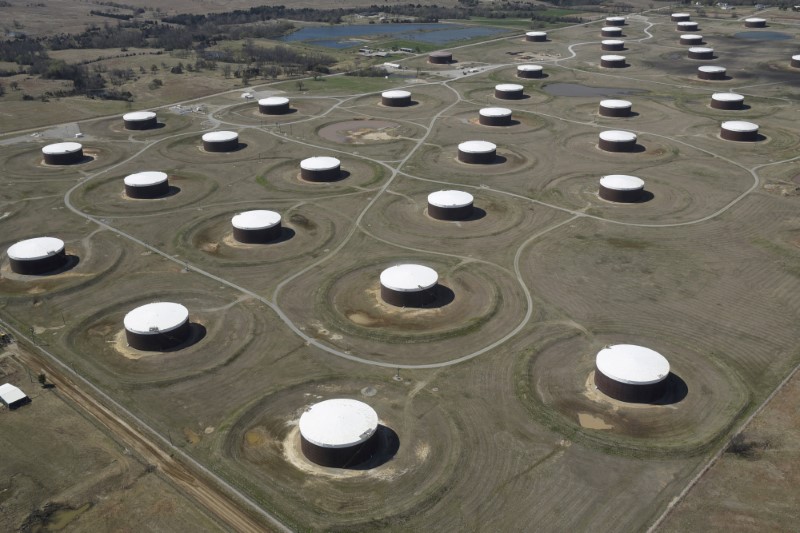
© Reuters. FILE PHOTO: Crude oil storage tanks are seen from above at the Cushing oil hub in Cushing
The Organization of the Petroleum Exporting Countries (OPEC), together with other producers including Russia, has pledged to cut its output by almost 1.8 million barrels per day (bpd) between January and June in an effort to prop up prices and rein in a global supply glut that has dogged markets for almost three years.
Yet so far the cutback has not had the desired effect as compliance by involved exporters is patchy and as other producers, including the United States, have stepped up to fill the gap, resulting in crude prices falling more than 10 percent since the beginning of the year.
To halt the decline, OPEC members increasingly favour extending the pact beyond June to balance the market, sources within the group said, although they added that this would require non-OPEC members like Russia to also step up their efforts.
One threat for OPEC is that other producers will fill the gap its production cuts leave.
With OPEC cutting but U.S. production rising, the premium of Brent crude over U.S. WTI has risen to around $3.5 per barrel, its highest since early 2016, potentially opening the opportunity for U.S. oil sales to Asia, traders said.
Eventually, however, traders said that healthy oil demand would help rebalance markets.
"Global demand for 2017 is expected to remain healthy and surpass long-term average growth in demand of 1.2 million barrels per day by between 0.2 and 0.4 million barrels per day. As such, the combination of robust demand and weaker global supply leading to rebalanced markets will not be de-railed by U.S. shale oil," said Jeremy Baker, senior commodity strategist at Vontobel Asset Management.
Traders said that U.S. crude storage data, due to be published later on Tuesday by the American Petroleum Institute (API), would likely be the next significant price driver.

Monday, 20 March 2017

Gold ticks up as traders look ahead to busy week of Fed speakers - Sean Seshadri

Gold prices extended gains to a fourth session on Monday, as the U.S. dollar headed for its longest losing streak since November in wake of the Federal Reserve's dovish guidance on the future pace of rate hikes.
Comex gold futures jumped to a session peak of $1,235.50 a troy ounce, the highest since March 6. It was last at $1,231.75 by 9:15AM ET (13:15GMT), up $1.55, or around 0.1%.
Meanwhile, spot gold was up $2.70 at $1,232.25 per ounce.
The U.S. dollar index, which measures the greenback’s strength against a trade-weighted basket of six major currencies, was down about 0.1% at 100.04 in New York morning trade. It fell to 99.86 earlier, the lowest since February 6.
Gold starts the week higher
The greenback has been on the retreat since the Fed raised interest rates on Wednesday last week, but stopped short of predicting a sharper acceleration in monetary tightening over the next two years.
The precious metal is sensitive to moves in U.S. rates, which lift the opportunity cost of holding non-yielding assets such as bullion.
A gradual path to higher rates is seen as less of a threat to gold prices than a swift series of increases.
Market players will focus on a handful of Fed speakers in the week ahead, including Chair Janet Yellen on Thursday, as they look for more clues on the timing of the next U.S. rate hike.
Monday sees Chicago Fed President Charles Evans speak about current economic conditions and monetary policy at the National Association for Business Economics luncheon in New York at 1:10PM ET (17:10GMT).
Traders will also keep an eye out on U.S. housing data to gauge if a recent increase in consumer spending and inflation is translating into higher home prices and a pick-up in home sales.
Headlines from Washington will also be in focus, as traders await further details on President Donald Trump's promises of tax reform and infrastructure spending.
The House is expected to vote on a heath care bill Thursday, and if it passes that would be seen as a small step moving Congress closer to considering tax reform, though any legislation must also battle its way through the Senate.
Also on the Comex, silver futures for May delivery held steady at $17.41 a troy ounce.
Meanwhile, platinum added 0.3% to $966.25, while palladium held firm at $777.10 an ounce.
Elsewhere in metals trading, copper futures dipped 1.3 cents, or 0.4%, to $2.679 a pound.
Investors mulled headlines out of the G20 finance ministers meeting in Germany at the weekend to gauge the potential impact that trade barriers could have on global growth.
Financial leaders from the world's biggest economies reiterated their warnings against competitive devaluations and disorderly foreign exchange markets, but they failed to agree on a commitment to keep international trade free and open, highlighting a global shift towards protectionism.

Friday, 17 March 2017

Oil up before U.S. rig data, OPEC mulls output cut extension - Sean Seshadrii

Oil was higher Friday ahead of the release of U.S. rig count data later in the session.
U.S. crude was up 18 cents, or 0.37%, at $48.93 at 08:15 ET. Brent crude added 15 cents, or 0.29%, to $51.89.
The market remains underpinned by compliance with output cuts by major producers.
OPEC and non-OPEC producers have agreed cuts of 1.8 million barrels a day in the first half.

Saudi Energy Minister Khalid al-Falih said the agreement may be extended beyond the six-month time frame if the market is not re-balancing as hoped.
"We’re going to do what it takes to bring the industry back to a healthy situation,” al-Falih told Bloomberg.
The Saudi minister voiced concerns about U.S. increased shale production, which could cancel out the impact of the agreed cuts.
Baker Hughes weekly rig count data are due out later in the session.
The number of rigs operating in the U.S. last week was the highest since October 2015.