Tuesday, 25 April 2017

Oil edges up after six straight sessions of losses - Sean Seshadri

Oil prices recovered some ground on Tuesday, halting six consecutive sessions of slide, but markets remain under pressure as traders lose confidence that pledged output cuts by major producers will rein in oversupply in a world awash with fuel.
U.S. West Texas Intermediate (WTI) crude futures (CLc1) had added 14 cents, or 0.3 percent, by 0640 GMT (2:40 a.m. ET), but remained below the $50 mark pierced late last week, at $49.37 a barrel.
Brent crude (LCOc1) rose 14 cents, or 0.27 percent, to $51.74 per barrel.
Traders said the gains were a counter-reaction to consecutive price drops in the previous six sessions.
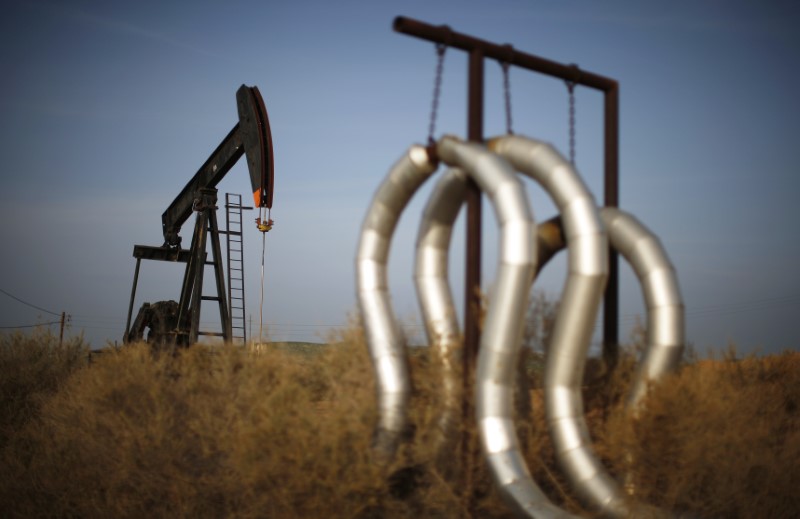
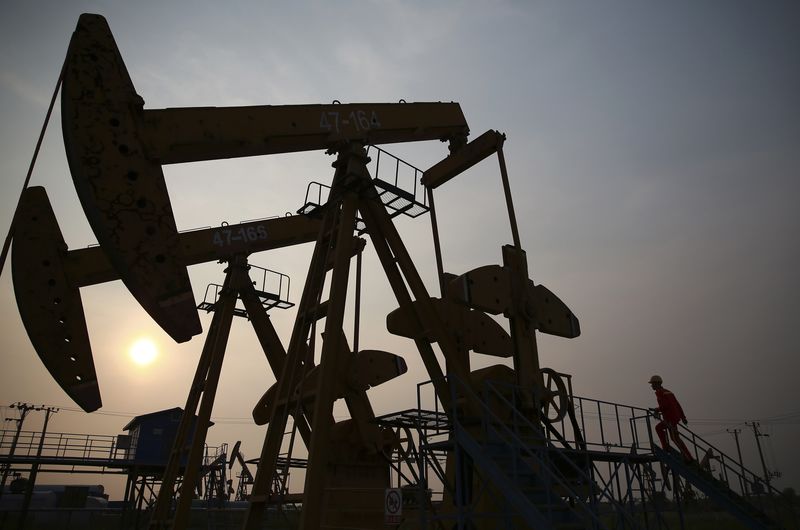
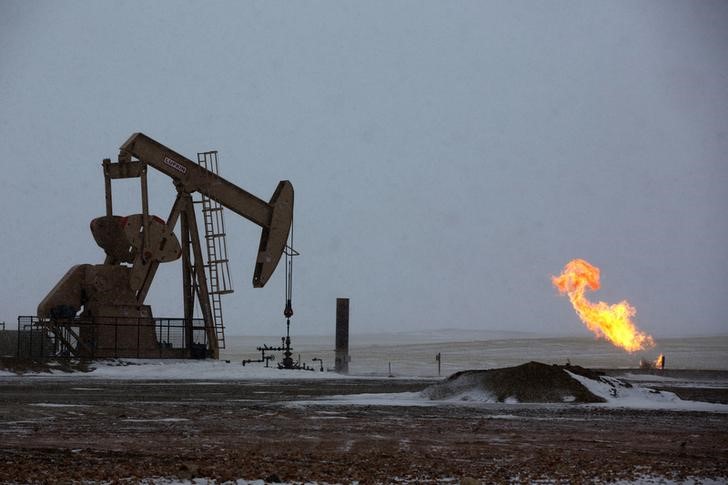
© Reuters. Pump jack and pipes are seen on an oil field near Bakersfield on a foggy day, California
Despite Tuesdays increases, market sentiment has turned bearish, with Brent down 10 percent since late 2016 despite efforts led by the Organization of the Petroleum Exporting Countries (OPEC) and Russia to cut output by 1.8 million barrels per day (bpd) in the first half of 2017 in order to tighten the market.
Given that oil supplies remain at record highs despite the cuts, Stephen Schork of the Schork report said on Tuesday that "OPEC has failed miserably in its endeavor to balance the oil market".
JPMorgan (NYSE:JPM) said in its latest weekly market note to clients that "it is evident that... crude markets are still struggling to clear (oversupply)."
The bank said that it was closing its "August Brent long position at a loss."
Indicating its cautious outlook, JPMorgan said that "crude markets are close to floating storage economics and (this) is a bearish sign for output price developments."
Floating storage is a clear indicator of oversupplied markets. It is pursued when oil for immediate delivery is so much cheaper than that for future dispatch that it becomes profitable for traders to charter tankers to store it for later.
JPMorgan said that in order to reduce the ongoing supply overhang, OPEC "will be forced to renew, and possibly deepen the agreement if they wish to keep prices much above $50 per barrel."
Russia said on Monday that its oil output could climb to the highest rate in 30 years if OPEC and non-OPEC producers do not extend a supply reduction deal beyond June 30.
Thomson Reuters Eikon data shows that Russian oil shipments, which exclude its pipeline exports, have already reached record highs of 5 million bpd in April, up 17 percent since December, before the cuts were officially implemented.
While producers may hurt under the renewed slack in crude markets, consumers like refiners benefit as their production margins making fuels such as gasoline improve .

Tuesday, 18 April 2017

Oil prices fall on expected surge in U.S. shale output - Sean Seshadri

Oil prices fell on Tuesday on news that U.S. shale oil output was expected to post the biggest monthly rise in more than two years, fuelling concerns that U.S. production growth is undermining OPEC-led efforts to rein in oversupply.
The latest U.S. government drilling data showed shale production in May was set to rise to 5.19 million barrels per day (bpd), with output from the Permian play, the largest U.S. shale region, expected to reach a record 2.36 million bpd.
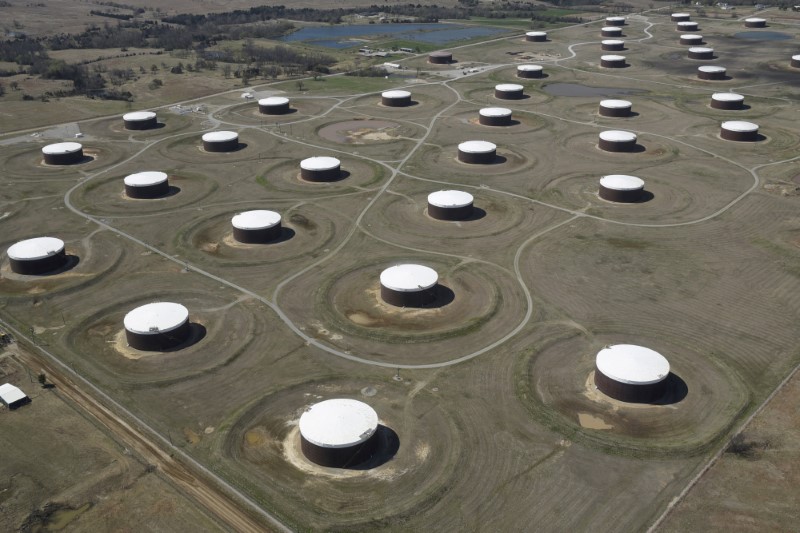
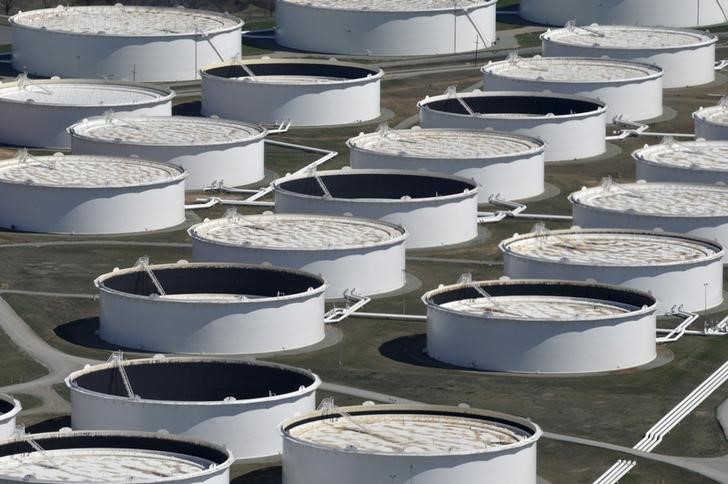
© Reuters. FILE PHOTO: Crude oil storage tanks are seen from above at the Cushing oil hub in Cushing
Global benchmark Brent crude futures were down 26 cents at $55.10 a barrel at 0803 GMT. They touched an intraday low of $54.98, the weakest level in 11 days.
U.S. West Texas Intermediate (WTI) crude futures traded down 21 cents at $52.44 a barrel, the lowest since April 10.
"EIA (U.S. Energy Information Administration) estimates for a combined 124,000 barrels-per-day growth in U.S. shale production over May have added another bearish element to the market," wrote analysts at JBC Energy, based in Vienna.
More barrels could be on their way to market from U.S. shale fields as financial companies are investing billions in production, a Reuters analysis showed.
Members of the Organization of the Petroleum Exporting Countries are cutting oil production by 1.2 million bpd from Jan. 1 for six months, the first reduction in eight years.
The energy minister of OPEC member the United Arab Emirates said on Tuesday he saw healthy oil demand growth this year and believed inventories would fall.
A preliminary Reuters poll showed analysts expected U.S. crude stocks to have fallen in the week to April 14, building on a surprise decline the previous week. [EIA/S]
Analysts said they expected crude oil inventories to have fallen by around 1.5 million barrels last week.
Inventory data is scheduled for release by the American Petroleum Institute at 4:30 p.m. EDT (2030 GMT) on Tuesday, followed by the official EIA report at 10:30 a.m. EDT (1430 GMT) on Wednesday.

U.S. natural gas bounces off 3-week low - Sean Seshadri

U.S. natural gas futures were higher on Tuesday, bouncing off the lowest level in three weeks as traders monitored shifting weather forecasts to assess the outlook for early-spring demand and supply levels.
U.S. natural gas for May delivery tacked on 1.5 cents, or around 0.5%, to $3.178 per million British thermal units by 10:05AM ET (14:05GMT). It fell to $3.114 earlier, the cheapest since March 29.
Prices of the heating fuel slumped 6.4 cents on Monday.
Weather patterns are expected to be rather bearish through the first half of the week due to mostly mild temperatures dominating much of the country beside the far northern U.S., according to forecasters at NatGasWeather.com.
However, a colder weather system will track over the southern and eastern U.S. later in the week through early next week to bring an increase in demand to stronger levels.
Natural gas prices have closely tracked weather forecasts in recent weeks, as traders try to gauge the impact of shifting forecasts on early-spring demand.
The heating season from November through March is the peak demand period for U.S. gas consumption.
Nearly 50% of all U.S. households use gas for heating.
Meanwhile, market participants looked ahead to weekly storage data due on Thursday, which is expected to show a build in a range between 40 and 50 billion cubic feet in the week ended April 14.
That compares with a gain of 10 billion cubic feet in the preceding week, a gain of 7 billion a year earlier and a five-year average rise of 35 billion cubic feet.
Total natural gas in storage currently stands at 2.061 trillion cubic feet, according to the U.S. Energy Information Administration, 20.2% lower than levels at this time a year ago but 12.8% above the five-year average for this time of year.

Thursday, 13 April 2017

Gold prices quoted sharply higher into Asia on risk, Trump views - Sean Seshadi

Gold prices were quoted sharply higher heading into the Asian trading day on Thursday on geopolitical risk sentiment and President Donald Trump's remarks on the dollar and interest rates.
Gold for June delivery on the Comex division of the New York Mercantile Exchange were last quoted up 1.11% to $1,288.35 a troy ounce. Silver futures were cited up 1.35% at $18,501 a troy ounce and copper down 2.61% to $2.540 a pound.
Overnight, gold prices traded higher on Wednesday, but eased from a five-month high, despite increased demand for safe-haven gold amid heightened geopolitical jitters.
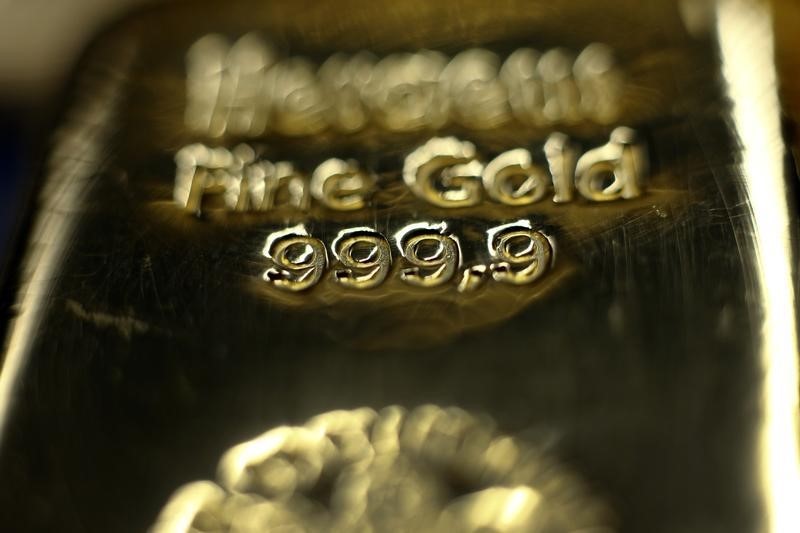
© Reuters.  Gold up in Asia
Risk-off sentiment has boosted to demand for traditional safe-haven assets including gold, as investors sought refuge from the recent market volatility amid increased geopolitical concerns.
U.S. – Russia relations remained in the political spotlight, as U.S. Secretary of State Rex Tillerson was expected in Moscow on Wednesday to meet with his Russian counterpart Sergey Lavrov and discuss a number of sensitive topics including the Korean peninsula, Syria and bilateral relations.
The meeting between Tillerson and Lavrov, came fresh off the heels of comments from Russia President Vladimir Putin on Wednesday, after he said trust had eroded between the United States and Russia.
Despite, an uptick in demand for the yellow metal, market participants expected gold prices to pull back from its current highs, on the back of a more hawkish Federal Reserve and a rise in the dollar.
Geopolitical tension on the Korean Peninsula also provided support. A call on Wednesday between Chinese President Xi Jinping and U.S. President Donald Trump called for a peaceful resolution of concerns with North Korea's nuclear and missile programs.
Trump told the Wall Street Journal on Wednesday, that he thinks the currency (dollar) is getting too strong and hinted that he may reappoint Janet Yellen to chair the Federal Reserve Board when her term ends in 2018, as he added "I do like a low-interest rate policy, I must be honest with you,”
It wasn’t the first time Trump expressed concern over the strength of the dollar, after he previously warned in January, that a soaring greenback has disadvantages for U.S. companies that do a lot of business abroad.

Crude down in Asia after China says oil imports rose 15% in Q1 - Sean Seshadi

Crude prices fell in Asia on Thursday after trade data from China showed a solid gain in first quarter crude imports as investors focused on global demand and supply and shrugged off a drop in U.S. inventories.
On the New York Mercantile Exchange crude futures for May delivery was last quoted down 0.09% to $53.06 a barrel, while on London's Intercontinental Exchange, Brent eased 0.09% to $55.81 a barrel.
On Thursday, China reports trade data for March that will provide some detail on oil flows in-and-out of the country. Exports are seen up by 3.2% year-on-year in March with imports expected to surge 18% for a trade balance surplus of $10 billion.
© Reuters. Crude down in Asia
China's imports soared by 31.1% in yuan terms, customs data showed on Thursday, with exports up 14.8% for the first quarter from a year ago. China reported a trade surplus of CNY454.94 billion in the period. Customs is expected to release dollar-denominated trade data later on Thursday.
China's crude oil imports rose 15% in the first quarter compared with the same period a year earlier to 105 million metric tons, or 8.52 million barrels per day, the country's General Administration of Customs said on Thursday. Imports of refined products edged down 0.6% in the first quarter from a year ago to 7.68 million tonnes.
Later, the Paris-based International Energy Agency will release its own estimates of crude supply and demand in March.
Overnight, crude futures settled lower on Wednesday, after the latest Energy Information Administration (EIA) report showed an unexpected drop in U.S. crude stockpiles from record highs while production increased.
Oil prices spiked to the upside, after the headline U.S. crude inventories number revealed an unexpected draw but gains were short lived, as investors shifted focus to the uptick in Cushing crude storage, which rose 276,00 barrels in the week.
For the week ending April 5, The EIA said that crude oil inventories fell by 2.166 million barrels compared to estimates of an increase of 87,000 barrels. Compliance with the global deal to drain the glut in supply, averaged 104% according to production figures published by OPEC.
In November last year, OPEC and other producers, including Russia agreed to cut output by about 1.8 million barrels per day (bpd) in an effort to combat the oversupply issue that has pressured prices over the last two years.

Crude holds weaker in Asia despite China Q1 crude import gains - Sean Seshadri

Crude prices held weaker in Asia on Thursday even after trade data from China showed a solid gain in first quarter crude imports as investors focused on global demand and supply and shrugged off a drop in U.S. inventories.
On the New York Mercantile Exchange crude futures for May delivery fell 0.19% to $53.01 a barrel, while on London's Intercontinental Exchange, Brent eased 0.18% to $55.76 a barrel.
China's imports soared by 31.1% in yuan terms, customs data showed on Thursday, with exports up 14.8% for the first quarter from a year ago. China reported a trade surplus of CNY454.94 billion in the period. Customs is expected to release dollar-denominated trade data later on Thursday.
© Reuters.  Crude down in Asia
In dollar terms, exports rose 16.4 % year-on-year in March with imports soaring 20.3%, both beating expectations, for a trade balance surplus of $23.9 billion, more than double the expected figure.
China's crude oil imports rose 15% in the first quarter compared with the same period a year earlier to 105 million metric tons, or 8.52 million barrels per day, the country's General Administration of Customs said on Thursday. Imports of refined products edged down 0.6% in the first quarter from a year ago to 7.68 million tonnes.
Later, the Paris-based International Energy Agency will release its own estimates of crude supply and demand in March.
Overnight, crude futures settled lower on Wednesday, after the latest Energy Information Administration (EIA) report showed an unexpected drop in U.S. crude stockpiles from record highs while production increased.
Oil prices spiked to the upside, after the headline U.S. crude inventories number revealed an unexpected draw but gains were short lived, as investors shifted focus to the uptick in Cushing crude storage, which rose 276,00 barrels in the week.
For the week ending April 5, The EIA said that crude oil inventories fell by 2.166 million barrels compared to estimates of an increase of 87,000 barrels.
Compliance with the global deal to drain the glut in supply, averaged 104% according to production figures published by OPEC.
In November last year, OPEC and other producers, including Russia agreed to cut output by about 1.8 million barrels per day (bpd) in an effort to combat the oversupply issue that has pressured prices over the last two years.

Wednesday, 12 April 2017

Crude in Asia at 5-week highs on risk views, API estimates ahead - Sean Seshadri

Crude prices rose to five-week highs in Asia on Tuesday with industry data on U.S. inventories later in the day expected to underpin market views on demand and supply in the world's top importer.
On the New York Mercantile Exchange crude futures for May delivery rose 0.17% to $53.17 a barrel, while on London's Intercontinental Exchange, Brent gained 0.21% to $56.10 a barrel.
Later Tuesday, the American Petroleum Institute (API) will report estimates of inventories for crude and refined products at the end of last week, followed by official data from the U.S. Energy Information Administration (EIA) on Wednesday. The two sets of figures diverged sharply last week with API showing a crude draw and EIA a build.
© Reuters.  Crude up in Asia
Analysts expect a 316,000 barrels build in crude supplies, and a drop in gasoline stocks of 1.761 million barrels and a decline in distillate supplies of 896,000 barrels.
Overnight, crude settled higher on Monday, after production halted at Libya’s largest oilfield for the second time in as many weeks while rising geopolitical tensions in the Middle East lifted sentiment.
Libya's Sharara oilfield was shut on Sunday, after a group blocked a pipeline linking it to an oil terminal, a Libyan oil source said. Crude prices continued to trade with upside bias, after last week’s U.S. missile strike on an airbase in Syria, underpinned a rally in oil prices, as investors worried about potential supply disruptions in the region.
Although, Syria is no longer a significant oil producer, it neighbors and has relationships with big oil producers in the oil-rich region.
A rise in geopolitical tensions and potential supply disruptions overshadowed concerns that rising levels of global oil supply, particular in the U.S., would dampened OPEC’s effort to drain the glut in supply.
Meanwhile, Kuwait oil chief, Essam al-Marzouq, fuelled expectations that OPEC would reveal further cuts in March compared to previous months, after he said he expected producers’ level of compliance with the deal to cut global supply would “be higher than the previous couple of months”.
Essam al Marzouq’s bullish comments came amid renewed hopes that OPEC would extend its current deal to cut production beyond June, after Russian Deputy Prime Minister Arkady Dvorkovich expressed his concern on Friday, that the deal to cut supply hasn’t delivered as much as expected.
In November last year, OPEC and other producers, including Russia agreed to cut output by about 1.8 million barrels per day (bpd).

Monday, 10 April 2017

Gold gains slightly in early Asia with Korean peninsula in focus - Sean Seshadri

Gold prices ticked up slightly in early Asia on Monday with geopolitical tensions in focus as the U.S. moved an aircraft carrier group closer to the Korean peninsula and as concerns linger over a missile strike on a Syrian airbase last week remain.
Gold for June delivery settled rose 0.04% to $1,256.45 a troy ounce on the Comex division of the New York Mercantile Exchange. Silver futures on the Comex eased 0.11% to $17.973 a troy ounce and copper futures were last quoted at 2.643 a pound.
A light regional data day is ahead in Asia with home loans figures from Australia for February seen up 0.1% month-on-month and remarks by Bank of Japan Governor Haruhiko Kuroda scheduled. Later on Monday Fed Chair Janet Yellen is scheduled to speak at the University of Michigan with investors looking for fresh cues on the timing of the next U.S. rate hike and plans to trim the bank’s balance sheet, particularly after weaker than expected jobs data on Friday.
© Reuters. Gold gains in Asia
Last week, gold prices retreated from five-month highs on Friday as the stronger dollar weighed on the precious metal.
Prices surged early Friday after the U.S. launched cruise missile strikes on a Syrian air base in the aftermath of suspected chemical-weapons attacks.
But the precious metal gave back gains as the dollar rose despite disappointing U.S. employment data as investors remained focused on the Federal Reserve’s plans to tighten monetary policy.
The Labor Department reported on Friday that the U.S. economy added just 98,000 jobs last month, the fewest since last May and well below the forecast for jobs growth of 180,000. Lower temperatures and winter storms accounted for the slowdown in hiring.
The unemployment rate ticked down to a 10-year low of 4.5%, pointing to underlying strength in the labor market.
The dollar initially sold off following the release of the weaker-than-anticipated employment data before regaining ground.
The dollar was boosted after New York Fed President William Dudley said on Friday that plans to trim the Fed’s balance sheet later this year would prompt only a "little pause" in its rate hike plans.
A strong U.S. dollar usually weighs on gold, as it dampens the metal's appeal as an alternative asset and makes dollar-priced commodities more expensive for holders of other currencies.

Friday, 7 April 2017

Crude spikes in Asia after US fires missiles into Syria - Sean Seshadri

Crude prices held well above 1% gains in Asia on Friday after earlier sinking more than 2% after U.S. fired dozens of missiles into Syria in response to a chemical weapons attack on civilians.
On the New York Mercantile Exchange crude futures for May delivery spiked 1.51% to $52.48 a barrel, while on London's Intercontinental Exchange, Brent gained 1.33% $55.62 a barrel. The missile strikes came shortly after President Donald Trump hosted Chinese President Xi Jinping in Florida in talks expected to focus on North Korea's missile and nuclear programs.
Meanwhile, market participants turn attention to Baker Hughes rig count, due to be released on Friday at 13:00 EDT.
© Reuters.  Crude spikes on Syria missile strike
Overnight, crude futures settled higher on Thursday, as expectations that an OPEC-led cut would be extended beyond June offset bearish U.S. inventories data.
Crude futures settled higher for a third straight day, despite renewed concerns that a ramp up in U.S. crude production would dampened OPEC’s efforts to reduce supply, after U.S. crude inventories swelled to a record high on Wednesday.
A report from the Energy Information Administration (EIA) on Wednesday, showed an unexpected rise in U.S. crude inventories, which confounded expectations of a drop in inventories, as the U.S. approaches the ‘summer driving season’.
The summer driving season officially kicks off in April, when U.S. consumer demand for gasoline usually peaks during the summer months.
Investors, remained hopeful that OPEC would extend its current deal to cut production beyond June in an effort to curb the current glut in supply.
In November last year, OPEC and other producers, including Russia agreed to cut output by about 1.8 million barrels per day (bpd).
Non-OPEC oil producers that joined the global deal to reduce output delivered only 64% of promised cuts in February, an industry source said March 20, which was far below the roughly 90% compliance with the deal from OPEC members.

Oil jumps in knee-jerk reaction after U.S. launches missile strikes at Syria - Sean Seshadri

Oil futures surged more than 2 percent to a one-month high on Friday after the United States launched dozens of cruise missiles at an airbase in Syria, with prices later dropping back as there seemed no immediate threat to supplies.
U.S President Donald Trump said he had ordered missile strikes against a Syrian airfield from which a deadly chemical weapons attack was launched earlier this week, declaring he acted in America's "national security interest" against Syrian President Bashar al-Assad.
After tepid trading before the attack, Brent crude futures (LCOc1) jumped to $56.08 per barrel, in what traders called a knee-jerk reaction, before easing to $55.62 per barrel at 0704 GMT, still up 1.3 percent from their last close.
© Reuters. FILE PHOTO: Crude oil storage tanks are seen from above at the Cushing oil hub, Cushing, Oklahoma
U.S. West Texas Intermediate (WTI) crude futures (CLc1) also climbed by more than 2 percent, to a high of $52.94 a barrel, before receding to $52.46, up 1.45 percent.
Both benchmarks hit their strongest levels since early March.
"The U.S cruise missile strikes have seen crude oil jump over 2 percent in a straight line," said Jeffrey Halley of futures brokerage OANDA in Singapore.
Although Syria has limited oil production, its location in the Middle East and alliances with big oil producers raised worries about spreading conflict that could disrupt crude shipments.
"What will be the response of Iran and Russia, two of the world's largest oil producers and staunch allies of the Assad regime?," Halley asked.
Russia and Iran both condemned the American attacks.
The strikes also rattled global markets. While safe-haven products like gold jumped , stock markets and the U.S. dollar (DXY) slumped. [MKTS/GLOB]
"Outside of the energy sector, investors have been moving into defensive sectors today, particularly utilities and gold miners," said Gary Huxtable of Australia's Atlantic Pacific Securities.
U.S. officials said the military had fired 59 cruise missiles against a Syrian airbase controlled by Assad's forces, in response to a poison gas attack on Tuesday in a rebel-held area.
Officials said the United States had informed allies and Russia before the air strikes, and that they did not target sections of the Syrian base where Russian forces were believed to be present.
In oil supply fundamentals, markets remained oversupplied, even with efforts led by the Organization of Petroleum Exporting Countries (OPEC) to cut supplies to prop up prices.
Oil trading data in Thomson Reuters Eikon shows that globally shipped crude volumes stood at 1.4 billion barrels in March (around 45.6 million bpd), up from 1.1 billion barrels in February, although on a daily basis the figure was similar to February's 45.5 million bpd due to that month's fewer days.
Shipped oil flows also remain higher than at any time during the second half of 2016, before the OPEC-led cuts were implemented, implying either poor compliance with the supply reductions, or plentiful alternative supplies.

Thursday, 6 April 2017

Crude drops in Asia on surprise U.S. crude build, demand eyed - Sean Seshadri

Crude prices dipped in Asia on Thursday after a surprise rise in U.S. inventories and with investors looking for fresh demand cues in the U.S. on uncertain prospects for President Donald Trump's proposed tax cuts and spending plans and the tone of summit talks with Chinese President Xi Jinping on starting later in the day in Florida.
On the New York Mercantile Exchange crude futures for April eased 0.45% to $50.92 a barrel, while on London's Intercontinental Exchange, Brent was last quoted at $54.04 a barrel.
Overnight, crude futures settled higher on Wednesday, but pulled back sharply from one-month highs, after the latest Energy Information Administration (EIA) report showed an unexpected rise in U.S. crude inventories to a record high.
© Reuters.  Crude down in Asia
Oil prices retreated from one-month highs, as fears returned that a ramp up in U.S. oil production could prove a challenge to an OPEC-led deal aimed at tackling the oversupply issue in the industry.
For the week ending March 29, The EIA said that crude oil inventories rose by 1.566 million barrels compared to estimates of a draw of 0.435 million barrels. Gasoline inventories dipped by 0.618 million against expectations for a drop of 1.422 million barrels while distillate stockpiles fell by 0.536 million barrels, compared to expectations of a 1.016 million decline.
The surprise build in U.S. crude stockpiles confounded expectations that U.S. demand for oil would start to pick up ahead of the ‘summer driving season’.
The Energy Information Administration (EIA) says that gasoline demand is typically about a million barrels per day higher at its summer peak than at its low point for the year, which is generally in January.
Meanwhile, market participants turn attention to Baker Hughes rig count, due to be released on Friday at 13:00 EDT.

Wednesday, 5 April 2017

Crude up in Asia as API reports larger than seen draw, Nkorea noted - Sean Seshadri

Crude oil prices rose in Asia, extending overnight gains after a larger than expected draw in industry estimates of U.S. crude inventories and as investors noted political risk from the launch of a medium-range ballistic missile by North Korea ahead of a summit between U.S. President Donald Trump and Chinese President Xi Jinping this week that will discuss the Korean peninsula in addition to trade.
© Reuters.  Crude up in Asia
On the New York Mercantile Exchange crude futures for May delivery rose 0.24% to $51.15 a barrel, while on London's Intercontinental Exchange, Brent was last quoted up 0.11% to $54.25 a barrel.
Crude inventories in the U.S. dropped a more than expected 1.83 million barrels at the end of last week, the American Petroleum Institute (API) said Tuesday, for the third decline in the past three months.
Gasoline stocks down by 2.56 million barrels and distillates showing a decline of 2.09 million barrels, also down more than levels seen in estimates that expected crude inventories dropped by 435,000 barrels and distillates eased by 1.016 million barrels and gasoline supplies fell 1.422 million barrels.
Supplies at the oil storage hub of Cushing, Oklahoma, rose by 1.34 million barrels.
Official data from the U.S. Energy Information Administration (EIA) is due on Wednesday morning.

Gold holds near 1-week high; Fed minutes, Trump-Xi summit in focus - Sean Seshadri

Gold prices were little changed near the prior session's one-week in European trading on Wednesday, as investors awaited fresh signals about the timing of the next U.S. interest rate hike while looking ahead to an upcoming meeting between U.S. President Donald Trump and Chinese President Xi Jinping.
Comex gold futures dipped 95 cents, or less than 0.1%, to $1,257.45 a troy ounce by 2:55AM ET (06:55GMT). Meanwhile, spot gold was down 60 cents at $1,255.60.
The yellow metal settled higher for the third session in a row on Tuesday after hitting its strongest since March 27 at $1,263.70.
© Reuters.  Gold holds near 1-week high
Also on the Comex, silver futures for May delivery shed 5.0 cents, or about 0.3%, to $18.27 a troy ounce. It reached its highest since March 2 at $18.43 in the prior session.
The Federal Reserve will release minutes of its most recent policy meeting on Wednesday at 2:00PM ET (18:00GMT). The U.S. central bank raised its benchmark interest rate by 25 basis points following its meeting on March 15 and stuck to its projection for two more hikes this year.
Besides the Fed minutes, Wednesday' calendar also features the ADP private sector nonfarm payrolls report and the ISM non-manufacturing survey.
Market experts do not expect the Fed to raise interest rates again until June, especially in light of recent softening data.
Futures traders are pricing in around a 55% chance of a hike at the Fed's June meeting, according to Investing.com’s Fed Rate Monitor Tool. Odds of a September increase was seen at about 77%.
The precious metal is sensitive to moves in U.S. rates, which lift the opportunity cost of holding non-yielding assets such as bullion. A gradual path to higher rates is seen as less of a threat to gold prices than a swift series of increases.
Meanwhile, market players are awaiting President Donald Trump's first meeting with Chinese counterpart Xi Jinping on Thursday and Friday.
Last week, Trump tweeted that the meeting, which is expected to cover differences over trade and North Korea, "will be a very difficult one."
North Korea fired a ballistic missile early on Wednesday from its east coast into the sea off the Peninsula, South Korea's military said, ahead of the Trump-Xi summit.
The U.S. dollar index was little changed at 100.41 in London morning trade, while the 10-year U.S. Treasury yield held steady at 2.35%.
Elsewhere in metals trading, platinum tacked on 0.3% to $967.10, while palladium firmed at $806.65 an ounce.
May copper futures climbed 3.3 cents to $2.645 a pound, getting a boost from news of a strike at the Peruvian operations of Southern Copper.

Tuesday, 4 April 2017

Gold gains in Asia in cautious trade with Xi-Trump meeting in focus - Sean Sehsadri

Gold drifted higher in Asia on Tuesday in cautious trade with China and India markets shut for holidays, putting the world's top gold importers on the sidelines, and with investors cautious ahead of a meeting this week between U.S. President Donald Trump and China's President Xi Jinping in Florida seen as high stakes on trade and geopolitical tensions in Asia.
Gold for April delivery on the Comex division of the New York Mercantile Exchange gained 0.35% to $1,258.45 a troy ounce. Silver futures on the Comex rose 0.55% to $18.312 a troy ounce, while copper futures edged up 0.12% to $2.609 a pound.
Overnight, gold prices held firm on Monday, after the release of mixed economic data while a softer dollar limited selling pressure in the yellow-metal.
© Reuters.  Gold up in Asia
Gold recovered from a dip earlier during the session, after March construction spending disappointed while economic activity in the manufacturing sector slowed less than expected.
The Institute of Supply Management (ISM) Manufacturing Purchasing Managers Index (PMI) hit 57.2 in March, a 0.5% decrease from the February reading of 57.7 but slightly above economists’ forecasts of 57.0. Meanwhile, the Commerce Department said, February U.S. construction spending increased 0.8% to its highest level in more than ten years but it missed analysts’ expectations of 1% rise.
Gold prices continued to trade in a tight range, as investors awaited comments from several Federal Reserve officials later during the session and a key nonfarm payrolls report on Friday, to assess the likelihood of a June rate hike. According to Investing.com’s Fed Rate monitor tool, 50% of traders expect a June rate hike.
Gold is sensitive to moves in U.S. interest rates, which lift the opportunity cost of holding non-yielding assets such as bullion.
Gold gained more than 8% in the first quarter, benefiting from political uncertainty in Europe, after the UK triggered Article 50 to formally kick off the Brexit process while investors continued to worry that anti-EU candidate Marine Le Pen could stage a surprise victory in the upcoming French presidential election.
Meanwhile, cash crunches in India due to the government’s recent demonetization will likely act as a temporary headwind for gold prices in the coming months, according to a report from FocusEconomics Consensus Forecast – Commodities.

Gold gains in Asia in cautious trade with Xi-Trump meeting in focus - Sean Sehsadri

Gold drifted higher in Asia on Tuesday in cautious trade with China and India markets shut for holidays, putting the world's top gold importers on the sidelines, and with investors cautious ahead of a meeting this week between U.S. President Donald Trump and China's President Xi Jinping in Florida seen as high stakes on trade and geopolitical tensions in Asia.
Gold for April delivery on the Comex division of the New York Mercantile Exchange gained 0.35% to $1,258.45 a troy ounce. Silver futures on the Comex rose 0.55% to $18.312 a troy ounce, while copper futures edged up 0.12% to $2.609 a pound.
Overnight, gold prices held firm on Monday, after the release of mixed economic data while a softer dollar limited selling pressure in the yellow-metal.
© Reuters.  Gold up in Asia
Gold recovered from a dip earlier during the session, after March construction spending disappointed while economic activity in the manufacturing sector slowed less than expected.
The Institute of Supply Management (ISM) Manufacturing Purchasing Managers Index (PMI) hit 57.2 in March, a 0.5% decrease from the February reading of 57.7 but slightly above economists’ forecasts of 57.0. Meanwhile, the Commerce Department said, February U.S. construction spending increased 0.8% to its highest level in more than ten years but it missed analysts’ expectations of 1% rise.
Gold prices continued to trade in a tight range, as investors awaited comments from several Federal Reserve officials later during the session and a key nonfarm payrolls report on Friday, to assess the likelihood of a June rate hike. According to Investing.com’s Fed Rate monitor tool, 50% of traders expect a June rate hike.
Gold is sensitive to moves in U.S. interest rates, which lift the opportunity cost of holding non-yielding assets such as bullion.
Gold gained more than 8% in the first quarter, benefiting from political uncertainty in Europe, after the UK triggered Article 50 to formally kick off the Brexit process while investors continued to worry that anti-EU candidate Marine Le Pen could stage a surprise victory in the upcoming French presidential election.
Meanwhile, cash crunches in India due to the government’s recent demonetization will likely act as a temporary headwind for gold prices in the coming months, according to a report from FocusEconomics Consensus Forecast – Commodities.