Tuesday, 27 June 2017

U.S. slaps dumping duties on Canadian wood, Ottawa vows to fight - Sean Seshadri

Escalating a trade dispute with Canada in the run-up to talks on renegotiating NAFTA, the U.S. Commerce Department on Monday imposed preliminary anti-dumping duties on Canadian softwood lumber of up to 7.72 percent.
When combined with preliminary anti-subsidy duties issued in April, the new measures will bring total duties on Canadian lumber to between 17.41 percent and 30.88 percent.
The announcement, which was largely expected, prompted an angry reaction from the Canadian government against what it called unfair and punitive duties.
"We will vigorously defend Canada's softwood lumber industry, including through litigation," the government said in a statement.
The bilateral dispute is the fifth over lumber in less than 40 years.

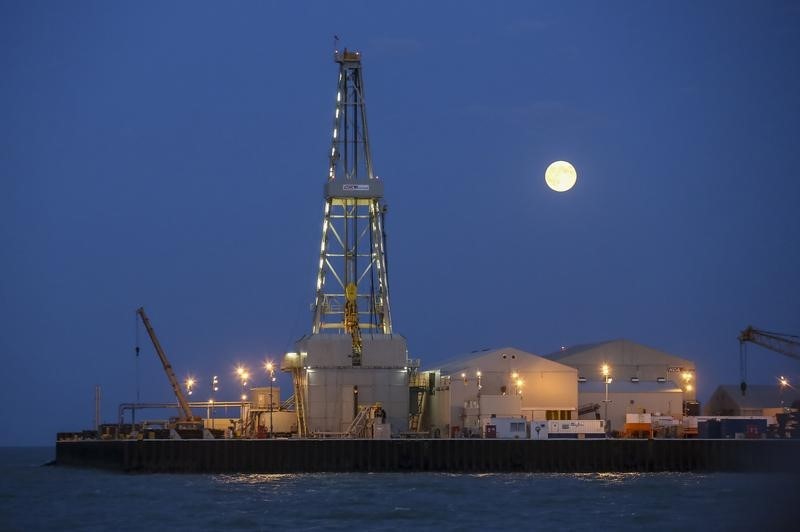
© Reuters. A pile of logs is pictured in Squamish,
U.S. producers asked the Commerce Department last November to investigate what they viewed as unfair subsidies to Canadian competitors, many of whom procure their timber from government lands at cheaper rates.
U.S. lumber producers generally cut timber grown on private land. Canada, which denies it subsidizes producers, said earlier this month it would give C$867 million ($654 million) in aid to the domestic industry.
Earlier on Monday, the Commerce Department said it made a preliminary decision to exclude Newfoundland and Labrador, Nova Scotia and Prince Edward Island from its investigation into whether Canada is dumping or unfairly subsidizing softwood lumber.
Until the decision is confirmed, U.S. Commerce Secretary Wilbur Ross said the duties would still be collected on lumber from the three provinces. The exclusion does not include New Brunswick, an Atlantic province bordering Maine that is also a major producer of softwood lumber.
The U.S. anti-subsidy and anti-dumping probes affect about $5.66 billion worth of imports of the construction material, and they show the United States taking a tough stance on trade with Canada as the two countries and Mexico prepare to renegotiate the 23-year-old North American Free Trade Agreement.
Much of the wood in the excluded Canadian provinces is also harvested from private land, and the three provinces had argued they operate under more of a free-market model.
Commerce said it is scheduled to announce a final decision on the anti-dumping duties on Sept. 7. Its preliminary duties were 7.72 percent for Canfor Corp and related firms, 4.59 percent for Resolute FP Canada, 7.53 percent for Tolko Industries, 6.76 percent for West Fraser Mills and 6.87 percent for all others.
NAFTA talks are expected to begin around Aug. 16.

Thursday, 22 June 2017

Crude gains in Asia with weekly U.S. rig count the next data point - Sean Seshadri

Crude prices gained in Asia on Friday with the market looking ahead to U.S. rig count figures.
On the New York Mercantile Exchange crude futures for August delivery rose 0.23% to $42.84 a barrel, while on London's Intercontinental Exchange, Brent gained 0.18% to $45.30 a barrel.
The number of rigs drilling for oil in the U.S. has increased for 22 straight weeks with the latest figures due on Friday from oilfield services firm Baker Hughes with investors waiting to see if recent price drops in crude are causing a re-think on drilling plans.
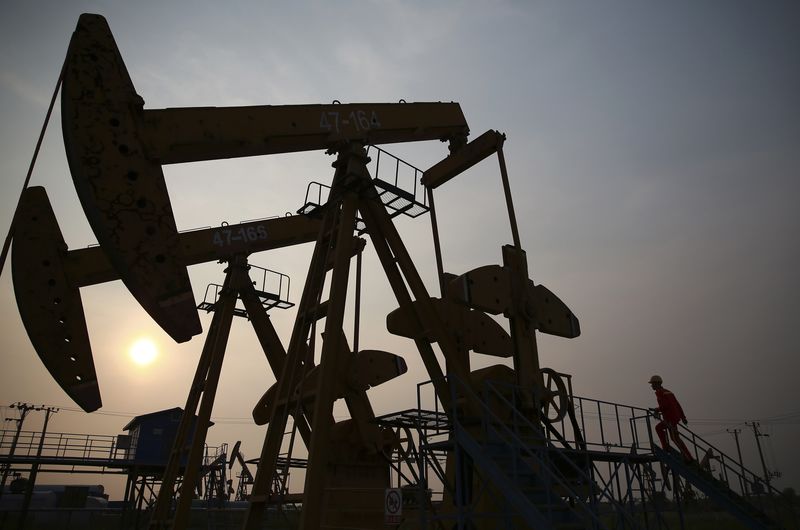
© Reuters.
Tropical storm Cindy made landfall on Thursday near Lake Charles, Louisiana, after it disrupted some operations in the Gulf of Mexico, home to about 17% of U.S. crude and 5% of dry natural gas output. The storm is now on the wane.
Overnight, crude futures settled higher on Thursday, paring some of the losses sustained in recent sessions but sentiment remained bearish as investors continue to fret about rising global stockpiles.
Crude futures snapped a three-day losing streak, despite a growing number of analysts scaling back their forecast for crude prices over the near-term amid fears that the glut in crude stockpiles would persist.
The move higher in crude futures comes a day after the Energy Information Administration said that crude stockpiles fell by roughly 2.45m barrels in the week ended June 16, above expectations of draw of about 2.1m barrels.
Despite the draw in U.S. crude stockpiles, rising shale output remains a principal concern among investors – The U.S. Department of Energy recently estimated that supply will grow by 122,000 barrels a day.
Since the turn of the year oil prices have slumped more than 20%, reflecting negative investor sentiment on oil, as doubts continued to mount as to whether OPEC and its allies can tackle the glut in supply.
In May, OPEC and non-OPEC members agreed to extend production cuts for a period of nine months until March, but stuck to production cuts of 1.8 million bpd agreed in November last year.

Wednesday, 21 June 2017

FOREX-Dollar advance stalls as oil slides, pound struggles near 2-month low - Sean Seshadri

Dollar index edges away from 1-month highs
* Crude oil tumble depresses US yields, weighs on dollar
* Loonie, Norwegian crown also pressured by weaker oil
* Pound slides to 2-mth low with higher rate hopes doused (Adds details and quotes, updates prices)
By Shinichi Saoshiro
TOKYO, June 21 (Reuters) - The dollar pulled back from one-month highs against a basket of currencies on Wednesday as tumbling oil prices pushed down U.S. yields, while the pound wobbled after Bank of England Governor Mark Carney shot down hopes of an interest rate hike.
The dollar index against a group of major currencies was 0.05 percent lower at 97.699 .DXY .
© Reuters.  FOREX-Dollar advance stalls as oil slides, pound struggles near 2-month low
It had hit a one-month high of 97.871 on Tuesday as expectations that the U.S. Federal Reserve, which hiked interest rates last week, would tighten policy again in 2017.
The greenback's advance, however, stalled as the dollar-supportive bounce in U.S. Treasury yields was cut short overnight.
Following a big drop in oil prices, the 10-year Treasury note yield US10YT=RR fell sharply on Tuesday, reversing a large portion of the gains it made after the Fed left the door open for another rate increase this year.
"Lower crude prices weaken inflationary pressures and in turn arrest the rise in U.S. yields," said Junichi Ishikawa, senior FX strategist at IG Securities in Tokyo.
"U.S. inflation indicators have not been strong to start with. Now that oil is falling, it could add further pressure to the dollar by weakening sentiment towards the U.S. energy sector."
The euro was steady at $1.1137 EUR= after retreating to a three-week low of $1.1119 overnight.
The dollar was down 0.2 percent at 111.220 yen JPY= , off a near one-month peak of 111.790 touched on Tuesday.
While the U.S. currency's advance may have stopped, some expected the losses to be limited, with the dollar seen eventually resuming its move higher.
"Sentiment towards the dollar may not be great, but participants don't have strong motivation to buy the yen or euro either given the low-yield policies of the Bank of Japan and the European Central Bank," said Masashi Murata, senior currency strategist at Brown Brothers Harriman in Tokyo.
"And with Wall Street shares holding near record highs and the Fed seemingly intent on increasing rates, the market would not be in a hurry pass negative judgement on the dollar."
The pound was little changed at $1.2630 GBP=D3 . The currency had slid 0.9 percent overnight and plumbed a two-month trough of $1.2603.
Sterling wobbled near two-month lows after BoE's Carney said on Tuesday that now was not the time to raise UK interest rates. Last week three out of eight BoE policymakers voted in favour of a rate hike and raised hopes for a near-term tightening. GBP/
Commodity-linked currencies were also on the back foot after U.S. crude oil prices slumped to nine-month lows overnight on global oversupply fears. O/R
The Norwegian crown NOK= languished near a five-week low against the dollar after falling about 0.5 percent on Tuesday.
The Canadian dollar, which fell about 0.35 percent overnight, extended losses to trade at C$1.3277 per dollar CAD=D4 .
The loonie moved further away from a 3-1/2-month high of C$1.3165 reached a week ago after Bank of Canada's governor expressed support for an interest rate hike.
The Australian dollar edged down 0.1 percent to $0.7574 AUD=D4 and the New Zealand dollar was 0.2 percent lower at $0.7228 NZD=D4 .
Brent crude LCOc1 tumbled to seven-month lows on Tuesday as increased supply from several key producers overshadowed high compliance to an output cut deal among OPEC and non-OPEC oil producers.

Monday, 19 June 2017

Gold / Silver / Copper futures - weekly outlook: June 19 - 23 - Sean Seshadri

Gold prices ended a bit higher on Friday, but the yellow metal still logged its second straight weekly loss after the Federal Reserve hiked rates and maintained plans to go ahead with another increase by year-end.
Gold for August delivery inched up $1.90, or about 0.2%, to close at $1,256.50 a troy ounce on the Comex division of the New York Mercantile Exchange. It touched its lowest since May 24 at $1,252.70 on Thursday.
For the week, the precious metal lost $13.20, or roughly 1.2%, the second weekly loss in a row.
Also on the Comex, silver futures dipped 5.5 cents, or around 0.3%, to settle at $16.66 a troy ounce, the lowest level since May 19. The white metal declined 3.3% for the week.
© Reuters.  Gold tallies back-to-back weekly loss
The Fed raised interest rates as widely expected on Wednesday and maintained plans to go ahead with another rate hike by year-end. The central bank also provided greater detail about how it plans to reduce its massive $4.5 trillion balance sheet.
Despite the Fed's relatively hawkish message, market players remained doubtful over the Fed's ability to raise rates as much as it would like before the end of the year due to a recent run of disappointing U.S. economic data.
U.S. homebuilding fell for a third straight month in May to the lowest level in eight months, data showed on Friday, suggesting that subdued housing activity could dent economic growth in the second quarter.
In a separate report the University of Michigan said its consumer sentiment gauged fell to 94.5 in early June from 91.1 in May. Analysts had expected a reading of 97.1.
Futures traders are pricing in less than a 15% chance of a hike at the Fed's September meeting, according to Investing.com’s Fed Rate Monitor Tool. Odds of a December increase was seen at about 35%.
The precious metal is sensitive to moves in U.S. rates, which lift the opportunity cost of holding non-yielding assets such as bullion.
Elsewhere in precious metals trading, platinum tacked on $5.50, or 0.6%, to end at $926.80, for a weekly loss of about 1.1%, while palladium advanced $7.70, or 0.9%, to close at $865.65 an ounce, taking its weekly gain to roughly 2.8%.
Meanwhile, copper lost less than half a cent on Friday to settle at $2.564 a pound, ending about 3.2% lower for the week.
Following a busy week packed with central bank meetings, market players will focus on a handful of Federal Reserve speakers in the week ahead, as they look for more clues on future monetary policy moves.
Traders will also keep an eye out on more U.S. housing data to gauge if a recent downtick in consumer spending and inflation is translating into lower home prices and slack in sales.
Meanwhile, in Europe, market players eagerly await the start of Brexit negotiations between Britain and the European Union.
Ahead of the coming week, Investing.com has compiled a list of these and other significant events likely to affect the markets.
Monday, June 19
Britain's Brexit minister David Davis and the European Union's chief negotiator Michel Barnier are due to start negotiations over Britain's departure from the bloc in Brussels.
New York Fed President William Dudley and Chicago Fed President Charles Evans are due to make public appearances.
Tuesday, June 20
Fed Vice Chair Stanley Fischer, Boston Fed President Eric Rosengren and Dallas Fed President Rob Kaplan are scheduled to deliver comments.
Wednesday, June 21
The National Association of Realtors is to release data on existing home sales.
Thursday, June 22
The U.S. is to produce weekly data on initial jobless claims.
Fed Governor Jay Powell is due to speak before the Senate Banking Committee.
Friday, June 23
The Commerce Department is to publish a report on new home sales.
St. Louis Fed President James Bullard, Cleveland Fed President Loretta Mester and Fed Governor Powell make public remarks.

Friday, 16 June 2017

Crude drifts a tad weaker in Asia ahead of U.S. rig count - Sean Seshadri

Crude prices drifted barely weaker oi Friday in Asia with investors eager to see if U.S. shale drillers keep pouring on the heat for OPEC and allies or whether recent price falls bring a pause.
On the New York Mercantile Exchange crude futures for July delivery fell 0.04% to $44.44 a barrel, while on London's Intercontinental Exchange, Brent was last quoted at $46.91 a barrel.
Energy services company Baker Hughes said last Friday that U.S. drillers last week added rigs for the 21st week in a row, the longest such streak on record. The U.S. rig count rose by 8 to 741, extending a year-long drilling recovery to the highest level since April 2015.
Overnight, crude futures settled lower on Thursday, amid growing investor skepticism in OPEC and its allies’ ability to reduce the glut in supply, as both OPEC and non-OPEC output remained elevated.
© Reuters.  Crude a tad weaker in Asia
Crude futures extended losses for a second straight day, as investors continued to fret about growing US production after recent data showed an unexpected surge in gasoline inventories, pointing to a period of potential weak demand.
The Energy Information Administration said Wednesday that gasoline inventories, one of the products that crude is refined into, unexpectedly rose by roughly 2m barrels against expectations for a decline of 457,000 barrels.
The bearish inventory report added to the current negative sentiment on oil, after the International Energy Agency said Wednesday that non-Opec output was set to increase over the near term.
"For total non-OPEC production, we expect production to grow by 700,000 bpd this year, but our first outlook for 2018 makes sobering reading for those producers looking to restrain supply," the IEA said in its monthly oil market report.
Rising non-Opec output has dented Opec and its allies’ global pact to reduce oversupply in the market, which has pressured prices for nearly three years.
Investors, however, have started to question whether Opec would continue to remain compliant with its pledge to cut production by 1.2m barrels per day until March 2018, after the oil-cartel revealed an unexpected increase in output in May.
OPEC said Tuesday, that output from the group rose by 336,000 barrels per day in May to 32.14m barrels per day.

Thursday, 1 June 2017

Crude holds gains in Asia despite weak Caixin PMI reading - Sean Seshadri

Crude prices held gain in Asia on Thursday despite a weaker than expected reading in a private manufacturing PMI that showed a drop into contraction in May.
On the New York Mercantile Exchange crude futures for July delivery rose 0.95% to settle at $48.78 a barrel, while on London's Intercontinental Exchange, Brent last gained 0.22% at $51.19 a barrel.
China's Caixin manufacturing PMI for May came in at 49.6, marking an 11-month low and slipping into contraction as it missed a level of 50.1 seen.
"China's manufacturing sector has come under greater pressure in May and the economy is clearly on a downward trajectory," Zhengsheng Zhong, director of macroeconomic analysis at CEBM Group, said in a note accompanying the Caixin survey.
© Reuters. Crude up in Asia
Demand faltered in May as total new orders fell to 50.3 - the lowest level in 11 months - from the previous month's 51.0. The rate of expansion in new export orders also weakened significantly, showing only marginal growth.
Overnight, China reported official manufacturing PMI for May at 51.2, compared with a level of 51.0 seen, and steady with 51.2 in April. The non-manufacturing PMI came in at 54.5, up from a level last at 54.0 in April. A figure above 50 denotes expansion.
U.S. crude oil inventories dropped 8.670 million barrels at the end of last week, the American Petroleum Institute said on Wednesday, far more than expected as gasoline supplies eased 1.726 million barrels and distillates fell 124,000 barrels.
Forecasts saw a crude oil inventory fall of 2.517 million barrels and a drop of 1.091 million barrels for gasoline stocks and a fall of 755,000 barrels for distillates.
Supplies at the Cushing, Oklahoma, oil hub dipped by 753,000 barrels.
The API estimates will be followed on Thursday with official data from the Energy Information Administration. The two sets of figures often diverge.
Overnight, crude futures settled more than 2% lower on Wednesday, as investors shrugged of a renewed pledge from Saudi Arabia and Russia to reduce the glut in supply.
Oil prices fell as investors ignored Saudi and Russian Energy ministers’ comments on reducing global inventories, as concerns grew that oil producers that are not part of the global pact to reduce supply would continue to ramp-up production, undermining Opec and its allies’ efforts to curb the glut in supply.
At a meeting with his Russian counterpart Alexander Novak, Saudi Energy Minister Khalid al-Falih said on Wednesday “more needed to be done to draw inventories towards the five-year average”.
Novak added that a new framework “for continued steady cooperation between OPEC and non-OPEC” was necessary even after the expiration of the Vienna agreements.
OPEC and non-OPEC members agreed to extend production cuts for a period of nine months until March last week, but stuck to production cuts of 1.8 million bpd agreed in November last year, against expectations that the oil cartel was set to announce deeper production cuts.
Goldman Sachs (NYSE:GS) earlier this week downgraded its forecasts for oil prices this year, targeting an average of $55.29 per barrel for Brent, down from its previous forecast of $56.76 a barrel while lowering its expectations WTI to $52.92 per barrel from $54.80.