Tuesday, 25 July 2017

Crude holds gians in Asia on upet views on output cuts, inventories - Sean Seshadri

Crude held gains in to Asia on Wednesday with markets getting a burst of upbeat news on global supply cuts and inventories.
On the New York Mercantile Exchange crude futures for August delivery were quoted at $48.85, up 1.17%, while on London\'s Intercontinental Exchange, Brent was cited at $50.77 a barrel.
U.S. oil stocks dropped a sharp 10.23 million barrels at the end of last week, the American Petroleum Institute estimated on Tuesday, with the figure far exceeding an expected 3.0 million barrels decline.
Gasoline supplies rose 1.9 million barrels following a large draw of 5.45 million barrels the previous week and compared with expectations of a draw. Distillate registered a draw of 0.11 million barrels after the draw of 2.9 million barrels previously.
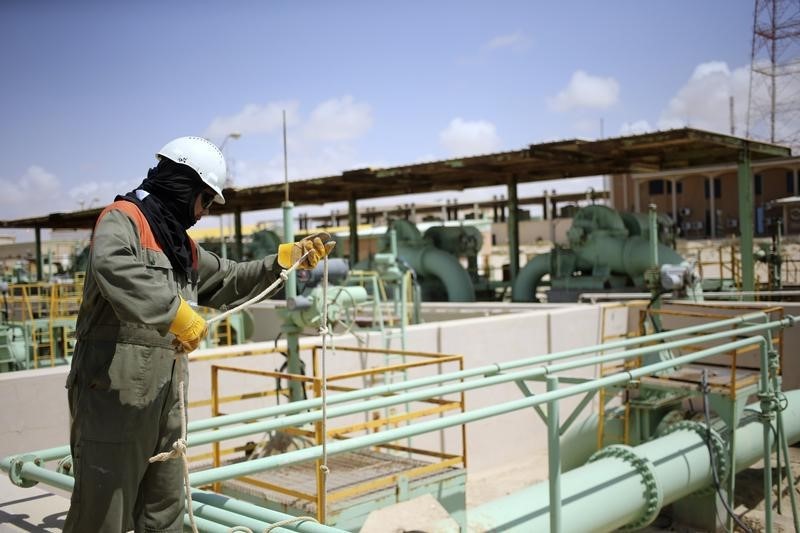
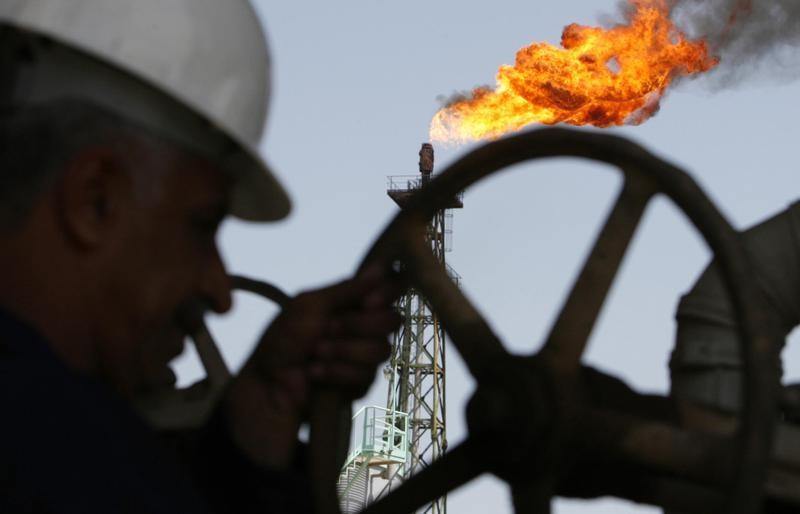
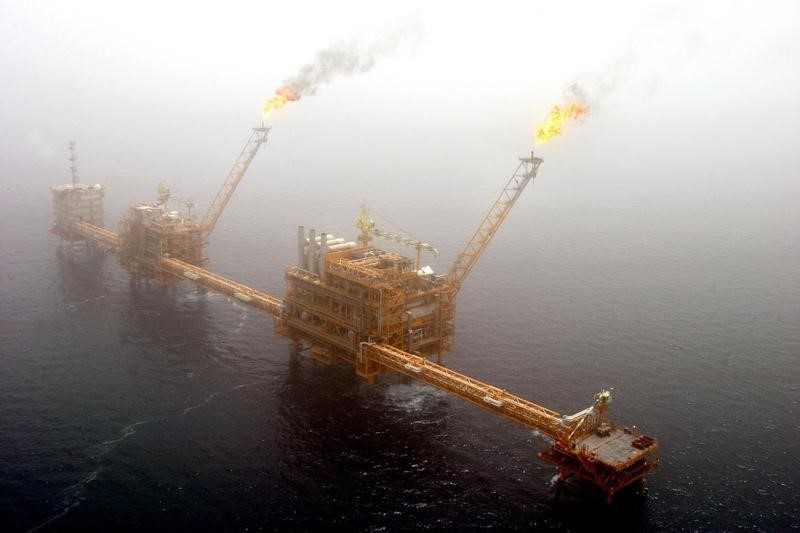
© Reuters. Crude up in Asia
Stocks at the oil storage hub of Cushing, Oklahoma, registered a substantial draw of 2.57 million barrels the 15th weekly draw out of the last 16 weeks. On Wednesday, the Energy Information Administration is due to release official data.
Overnight, crude futures settled higher on Tuesday, as investors continued to cheer Saudi Arabia’s pledge to lower crude exports and Opec’s commitment to boost compliance with output cuts to curb excess supplies.
At a gathering of ministers from major crude-producing nations in St. Petersburg, Russia on Monday, Saudi Energy Minister Khalid al-Falih said his country would limit crude oil exports at 6.6 million barrels per day (bpd) in August, almost 1 million bpd below levels a year ago.
The Saudi energy minster added that the production-cut agreement could be extended beyond March if necessary but any further extension would rely on non-compliant nations adhering to the agreement.
Opec’s compliance rate – with the deal to curb production –fell to 78% June, the IEA said in its report earlier this month.
Russian Energy Minister Alexander Novak said an additional 200,000 bpd of oil could be removed from the market if there is 100% compliance with the OPEC-led deal.
Despite the somewhat positive outcome of the meeting, Opec has its work cut out to curb excess supplies and lower crude stockpiles to the five-year average, which is the target level for Opec and non-Opec members.
Opec said that stocks held by industrial nations had fallen by 90 million barrels in the first six months of the year but were still 250 million barrels above the five-year average.

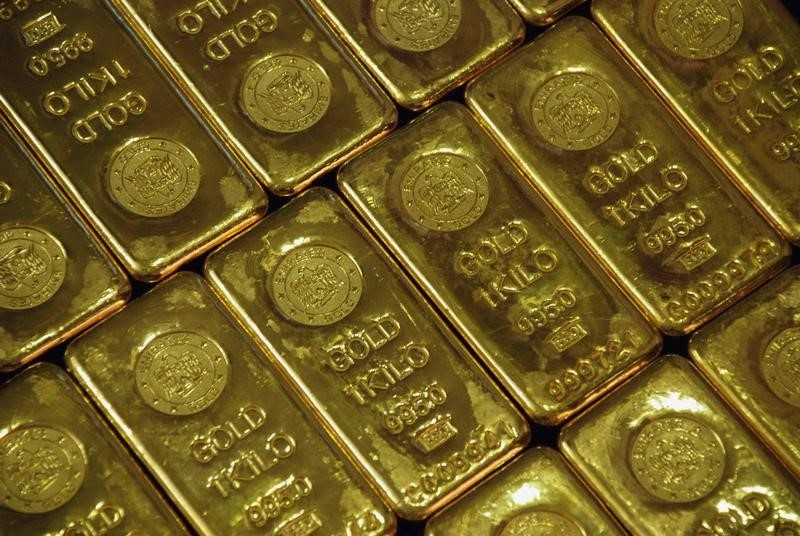
Gold flat as dollar off 13-month lows - Sean Seshadri

Gold prices remained roughly unchanged on Monday, as investors mulled over mostly upbeat economic data ahead of the Federal Reserve’s policy meeting later this week while continued U.S. political uncertainty limited downside momentum.
Gold futures for August delivery on the Comex division of the New York Mercantile Exchange fell by $0.45, or 0.04%, to $1,254.47 a troy ounce.
Gold prices pulled back from highs on Monday, amid an uptick in the greenback, following upbeat economic reports easing investor concerns about a slowdown in the U.S. economy.
On Monday, Markit's manufacturing and services flash surveys both showed the U.S. beating expectations.
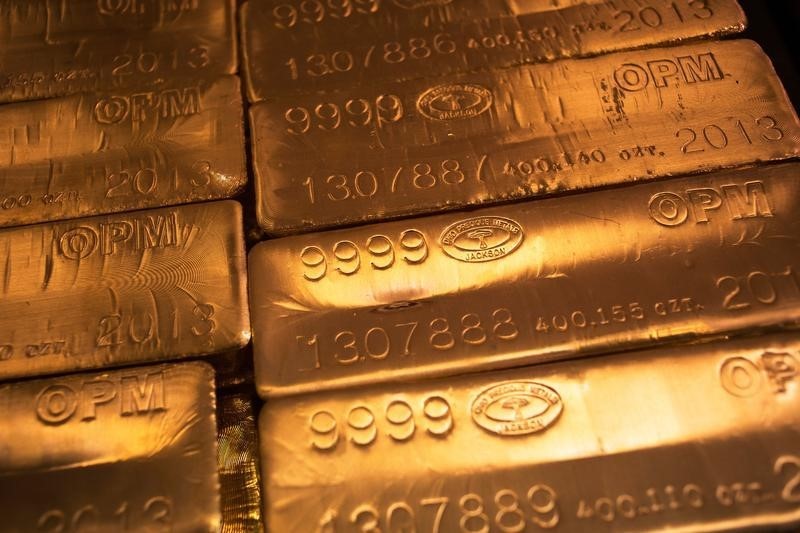
© Reuters.  Gold posted a weekly gain last week
In a separate report, the National Association of Realtors said Monday, sales of second-hand homes slid in June to the lowest level since February as tight supply and high prices weighed on housing activity despite strong demand.
Sales of previously-owned homes fell 1.8% in June from the previous month, to an annualized pace of 5.52m units.
U.S. political uncertainty also added a measure of support for the precious metal, as President Donald Trump's son-in-law and senior advisor Jared Kusher, in his testimony to the Senate Intelligence Committee, said neither that he nor anyone in the Trump campaign team colluded with Russian officials over the US election.
Dollar-denominated assets such as gold are sensitive to moves in the dollar – A rise in the dollar makes gold more expensive for holders of foreign currency and thus, decreases demand.
The trio of economic reports come ahead of the Federal Reserve’s policy meeting slated for Wednesday, with the majority of analysts expecting the Fed to keep its benchmark rate unchanged.
In other precious metals, silver futures fell 0.18% to $16.428 a troy ounce while platinum futures lost 0.56% to $932.12.
Copper traded at $2.738, up 0.57%, while natural gas, fell by 2.80% to $2.881.

Sean Seshadri - Crude futures settle higher as Saudi oil chief pledges export cuts

Crude futures settled higher on Monday, after Opec producer Saudi Arabia pledged to lower crude exports in August while Nigeria agreed to curb production.
On the New York Mercantile Exchange crude futures for August delivery rose 1.3% to settle at $46.34 a barrel, while on London's Intercontinental Exchange, Brent added 1.21% to trade at $48.64 a barrel.
At a gathering of ministers from major crude-producing nations in St. Petersburg, Russia on Monday, Saudi Energy Minister Khalid al-Falih said his country would limit crude oil exports at 6.6 million barrels per day (bpd) in August, almost 1 million bpd below levels a year ago.
The Saudi energy minster added that the production-cut agreement could be extended beyond March if necessary but any further extension would rely on non-compliant nations adhering to the agreement.
© Reuters.  Crude futures made a positive start to the week
Also adding to positive sentiment on oil, were reports suggesting that Nigeria committed to take part in production if it reaches a production level of 1.8m bpd.
Nigeria output reached 1.7 million bpd in June, according to independent sources cited by OPEC in a monthly report.
Some analysts praised Nigeria decision to agree to cap production but expressed concerns about Opec’s compliance rate – with the deal to curb production – which fell to 78% June, the IEA said in its report earlier this month.
“The only significant thing about the meeting is that Nigeria has voluntarily agreed that they will not increase their production above 1.8 [million barrels a day] once they have achieved that level,” said Naeem Aslam, chief market analyst at ThinkMarkets U.K.
But when it comes to the “compliance side of things,” that’s getting “really ugly,” he said. “A lot of cheating is already happening and we are only half [way] through this agreement,”
In May, Opec and non-Opec members agreed to extend production cuts of 1.8m bpd for a period of nine months until March but rising production from the U.S., Nigeria and Libya has undermined the cartel’s efforts to curb excess supply.

Thursday, 13 July 2017

Sean Seshadri - U.S. on track to be world's No.2 LNG exporter by end-2022: IEA

 The United States is on track to have capacity to become the world's second largest exporter of liquefied natural gas (LNG) by the end of 2022, just behind Australia and ahead of Qatar, the International Energy Agency (IEA) said.
Overall, global LNG export capacity would reach 650 billion cubic meters (bcm) a year by the end of 2022, compared to less than 452 bcm a year in 2016, the IEA said in its annual report on gas markets.
Of that amount, Australia would have capacity to export 117.8 bcm a year of LNG, followed by the United States with 106.7 bcm a year and Qatar with 104.9 bcm a year, it said.
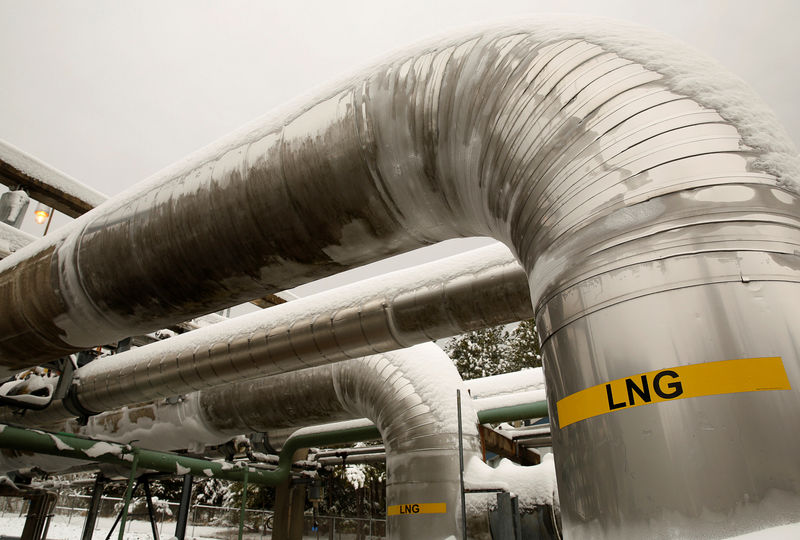
© Reuters. FILE PHOTO: Snow-covered transfer lines are seen at the Dominion Cove Point Liquefied Natural Gas terminal in Maryland
Australia would stay top by adding 30 bcm a year of capacity by the end of 2022 to its existing capacity, but the United States, which has seen shale gas output surge, would add about 90 bcm a year to its capacity of about 14 bcm a year now.
"By the end of our forecast period, the United States will be well on course to challenging Australia and Qatar for global leadership among LNG exporters," the report said.
However, the new LNG capacity is being added to an already well-supplied market, while demand is falling in some of the traditionally large importing nations, such as Japan, it said.
With demand expected to reach 460 bcm a year by 2022, the market would have 190 bcm a year in excess capacity, putting pressure on gas prices and discouraging new upstream investment.
Current low LNG prices are already making it tougher for exporters, and competition is loosening the typically rigid contracts that have dominated the long-distance trade.
"This change will be further accelerated by the expansion of U.S. exports, which are not tied to any particular destination and so will play a major role in increasing the liquidity and flexibility of LNG trade," the IEA said.
Qatar said last week it planned to raise its LNG output by 30 percent to 100 million tonnes a year (roughly 140 bcm a year) in the next five to seven years, in what was seen as a challenge to other exporters.
The IEA report did not assess the impact of Qatar's plans as the extra capacity was expected to be in place after the report's forecast period of 2016-2022, Keisuke Sadamori, the IEA's director of energy markets and security, told reporters.
Overall, the IEA said global gas production would grow faster than oil and coal in the next five years, helped by low price and ample supply, alongside a growing preference for gas because of its lower emissions compared to other fossil fuels.
Global gas demand was expected to rise by 1.6 percent a year to 4,000 bcm in 2022, slightly higher than last year's forecast of 1.5 percent, the IEA said. Most of the expected growth was expected to come from developing countries, led by China.
Most gas is transported by pipeline rather than on ships as LNG.
The United States, the world's largest gas producer, would increase output more than any other country in the next five years, the IEA. By 2022, U.S. production was expected to be 890 bcm, accounting for 22 percent of the total global gas output.

Wednesday, 12 July 2017

Sean Seshadri - Gold continues slow climb

Gold climbed in Asia on Wedneday, continuing a recovery from multi-month lows last week.
Gold futures for August delivery edged up 0.37% to $1,219.23 as of mid-morning.
Gold has been rebounding this week after stronger than expected economic data out of the U.S., a subdued inflation picture in China and a narrower than expected current account surplus in Japan. A strengthening in other commodity prices like oil and iron have also helped while political uncertainty in the U.S. has taken some of the shine off the US dollar.
Gold and the dollar typically move in opposite directions, which means if the dollar goes down, gold futures, which are denominated in the U.S. currency, will rise. The U.S. dollar index, which measures the greenbackís strength against a trade-weighted basket of six major currencies, was down 0.11% to 95.38 as of mid-morning. The gold U.S. dollar index was up 0.19% to 1,219.70.
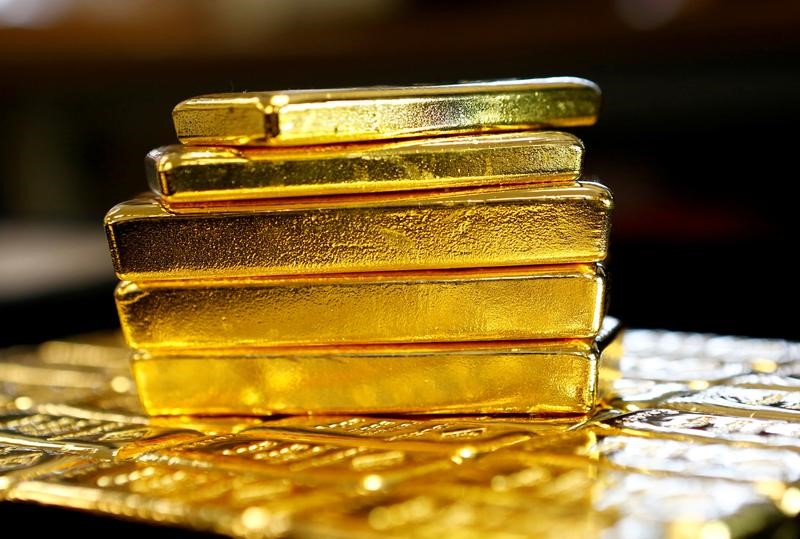
© Reuters.  Gold prices have continued to recover this week from multi-month lows.
On Monday, China reported that the Consumer Price Index rose 1.5% year-on-year in June and the Producer Price Index rose 5.5%.
Earlier, Japan reported its unadjusted current account surplus at •1.654 trillion, narrower than the •1.796 trillion expected, while core machinery orders fell 3.6% on year in May, compared to a gain of 7.7% seen. USD/JPY changed hands at 113.98, up 0.06%.
Investors are now looking forward to US Federal Reserve Chair Janet Yellen's testimony on monetary policy as well as U.S. data on inflation and retail sales, due out on Friday. Trade data from China on Thursday should also give markets some direction.
The Fed hiked rates at its June meeting and stuck to its forecast for one more rate hike this year, but the subdued inflation outlook has raised doubts over whether officials will be able to stick to their planned tightening path. Gold is highly sensitive to rising rates, which lift the opportunity cost of holding non-yielding assets such as bullion, while boosting the dollar.
Last week, gold prices dropped to almost four-month lows on Friday.
The U.S. economy added 222,000 jobs last month the Labor Department reported, more than the 179,000 new jobs expected by economists.

Tuesday, 11 July 2017

Sean Seshadri - Gold prices give up Monday gains in Asia, Tokyo stands out

Gold prices generally lost ground in Asia on Tuesday, giving up some gains from Monday, with Tokyo gold standing out as the sole gainer.
Gold futures for August delivery edged down 0.13% to $1,211.60%, giving up some gains from the day before. In Tokyo, the June 2018 contract gained 0.23% to JPY4,442 ($38.91) a gram.
In the week ahead, investors will focus on Fed Chair Janet Yellen's testimony on monetary policy as well as U.S. data on inflation and retail sales, due out on Friday, and trade data from China on Thursday. A hawkish outlook from the Fed could send gold further down to test multi-month lows.
© Reuters.  Gold remains weak with pressure to test multi-month lows.
The U.S. dollar index, which measures the greenbackís strength against a trade-weighted basket of six major currencies, was up 0.08% to 96.10. The gold U.S. dollar index was down 0.17% to 1,212.26
Gold and the dollar typically move in opposite directions, which means if the dollar goes up, gold futures, which are denominated in the U.S. currency, will drop.
Last week, gold prices dropped to almost four-month lows on Friday after a stronger-than-forecast U.S. jobs report boosted the dollar against a basket of the other major currencies. The U.S. economy added 222,000 jobs last month the Labor Department reported, more than the 179,000 new jobs expected by economists. The rapid pace of jobs growth reassured investors that the economy is on a strong enough footing to justify the Federal Reserve's plans to raise interest rates once more this year.
The Fed hiked rates at its June meeting and stuck to its forecast for one more rate hike this year, but the subdued inflation outlook has raised doubts over whether officials will be able to stick to their planned tightening path.
Gold is highly sensitive to rising rates, which lift the opportunity cost of holding non-yielding assets such as bullion, while boosting the dollar.

Monday, 3 July 2017

Crude up in Asia as Qatar faces deadline on Gulf demands - Sean Seshadri

Crude gained in Asia on Monday as Qatar faced a deadline on 13 demands by Gulf countries to end alleged support for terrorism and shut Doha-based Al Jazzera, with the emirate expected to reject the calls this week.
The U.S. West Texas Intermediate crude August contract rose 0.41% to $46.23 a barrel On the ICE Futures Exchange in London, Brent oil for September delivery was last quoted at $48.87 a barrel.
Last week, oil prices extended gains into a seventh session on Friday to log their biggest weekly gain since mid-May, as investors were encouraged by fresh signals of a decline in U.S. crude production.
Energy services company Baker Hughes reported on Friday that the number of active U.S. rigs drilling for oil declined by two to 756 rigs at the end of last week.
© Reuters.  Crude up in Asia
That marked only the second time the weekly oil-rig count fell this year. Oil-rig numbers had climbed for 23 weeks in a row.
The report came after U.S. government data revealed that total domestic crude production fell by 100,000 barrels a day to 9.25 million barrels for the week ended June 23. That was the biggest decline in weekly output since July 2016.
Crude reached bear-market territory late last month amid concern that the ongoing rebound in U.S. shale production is derailing efforts by other major producers to rebalance the market.
In May, OPEC and some non-OPEC producers extended a deal to cut 1.8 million barrels per day in supply until March 2018.
So far, the production-cut agreement has had little impact on global inventory levels due to rising supply from producers not participating in the accord, such as Libya and Nigeria, and a relentless increase in U.S. shale oil output.
In the week ahead, market participants will eye fresh weekly information on U.S. stockpiles of crude and refined products on Wednesday and Thursday to gauge the strength of demand in the world’s largest oil consumer.
The reports come out one day later than usual due to the U.S. Independence Day holiday on Tuesday.
Meanwhile, traders will also continue to pay close attention to comments from global oil producers for evidence that they are complying with their agreement to reduce output this year.